

When people search for a “GPS tracker app,” they usually mean one of three things: find a lost phone, keep kids safe, or share location with family without constant stress.
The problem is that most apps sound identical on paper. In real life, GPS tracking comes down to reliability (does it update?), accuracy (is the pin actually close?), and battery impact (does the phone start dying early?).
This guide compares the best GPS tracker options for Android and iPhone, plus when you should use free built-in tools like Find My / Find My Device instead.
Short on time? Quick verdict
- Best overall GPS + family oversight: mSpy (GPS Tracking).
- Best phone-locator style: uMobix (GPS Cell Phone Locator).
- Best “simple dashboard” feel: Eyezy (GPS Tracking).
- Best lightweight alternative: Spynger (GPS Tracker).
- Best quick lookup style: Scannero (GPS/IP Address Tracker).
- Safest kid-first option: Bark (parental control + optional GPS watch route).
Quick jump: 60-second checklist · Verdict · Comparison table · What really matters · Best for your situation · Setup tips & common issues · Reviews · Legal notes · FAQ
60-second decision checklist
- Goal: lost phone recovery, child safety, or family location sharing?
- Platform: Android is usually easier to keep stable; iPhone depends more on how you set it up.
- Update speed: do you need real-time-ish updates, or is “last known location” enough?
- Accuracy reality: indoors, GPS can drift—Wi-Fi/cell triangulation matters.
- Battery: the more frequent the updates, the bigger the battery hit.
- Access: for kids/family supervision, use only on a device you own/manage or have permission for.
Verdict: which GPS tracker app should you pick?
If you want the best “overall” GPS tracking with broader oversight: go with mSpy GPS Tracking. It’s a strong pick when GPS is part of a bigger safety routine.
If you want a straightforward phone locator feel: uMobix GPS Cell Phone Locator is usually the best fit.
If you want something that feels easy to check daily: Eyezy GPS Tracking is often the least overwhelming.
Try uMobix GPS Locator Try Eyezy GPS Tracking
Comparison table: best GPS tracker apps (Android & iPhone)
| App | Best for | Tracking style | Strength | Watch-outs | CTA |
|---|---|---|---|---|---|
| mSpy | GPS + broader family oversight | GPS location as part of a full toolkit | Best overall “suite” option | More features than some families need | mSpy GPS |
| uMobix | Phone locator (simple goal) | GPS locator positioning | Great “locator” fit | Needs stable access for reliability | uMobix GPS |
| Eyezy | Easy daily “check the map” routine | GPS tracking with parent-friendly UI | Most parent-friendly feel | Don’t expect perfect indoor accuracy | Eyezy GPS |
| Spynger | Lightweight alternative | GPS tracker positioning | Good “simple” backup pick | Varies more with setup stability | Spynger GPS |
| Scannero | Quick lookup style | GPS/IP address tracker positioning | Fast “check” option | Not a full parental-control suite | Scannero |
| Bark | Kid-first safety & boundaries | Parental control approach (and optional watch route) | Safest family vibe | More prevention than “pure GPS app” | Bark |
What really matters with GPS tracking (accuracy, updates, battery)
1) Real-time vs last-known location
Many parents think GPS tracking should update constantly. In practice, most apps balance update frequency with battery. If you need “near real-time,” expect more battery use. If you just need “where is the phone right now,” last-known can be enough for most situations.
2) Indoor accuracy is different
GPS is strongest outdoors. Indoors (mall, school buildings, apartment blocks), location often relies more on Wi-Fi and cell towers—so a pin can drift. Don’t overreact to small jumps on the map.
3) Android vs iPhone reliability
- Android: reliability depends heavily on permissions and battery/background restrictions.
- iPhone: reliability depends more on keeping access stable and checking after major updates.
Helpful internal guides (high impact for fewer “it stopped updating” moments):
4) Don’t forget free built-in tools
If your main goal is simply recovering a lost phone, the most reliable first step is often the built-in ecosystem tool (Apple/Google). Pair it with a “family locator” strategy when needed:
- Best apps to find a lost or stolen phone
- Best lost phone tracker apps for Android
- Best lost iPhone finder apps
Best for your situation
- I want GPS + broader safety monitoring for a teen: mSpy GPS Tracking.
- I want a straightforward phone locator feel: uMobix GPS Cell Phone Locator.
- I want the simplest “check the map daily” routine: Eyezy GPS Tracking.
- I want a lightweight alternative: Spynger GPS Tracker.
- I want a quick lookup style option: Scannero GPS/IP Address Tracker.
- I want the safest kid-first approach: Bark parental control (and consider a GPS watch route if that fits your family).
- I want a family-only locator shortlist: Best family phone locator apps.
Setup tips & common GPS tracking issues
Tip 1: Fix battery/background restrictions first (especially Android)
If location stops updating, it’s usually not “GPS is broken.” It’s the OS limiting background activity. Set up properly once, then do quick checks after big updates.
Tip 2: Use “safe zones” as a sanity check
Instead of obsessing over every movement, use location to confirm the big stuff: home, school, practice, friend’s place. That’s where GPS tracking actually reduces stress.
Tip 3: Watch for bypass behavior (second devices)
If location suddenly “doesn’t make sense,” it may be because the person is using a second phone/tablet. The fix is not more tracking—it’s clearer family rules and device agreements.
Tip 4: Lost phone? Do these steps first
- Use the built-in find tools (Apple/Google) immediately.
- Lock the device / mark as lost if available.
- If theft is likely, avoid confrontation and contact authorities.
More here: apps to find a lost or stolen phone.
Reviews
mSpy — GPS Tracking
Description
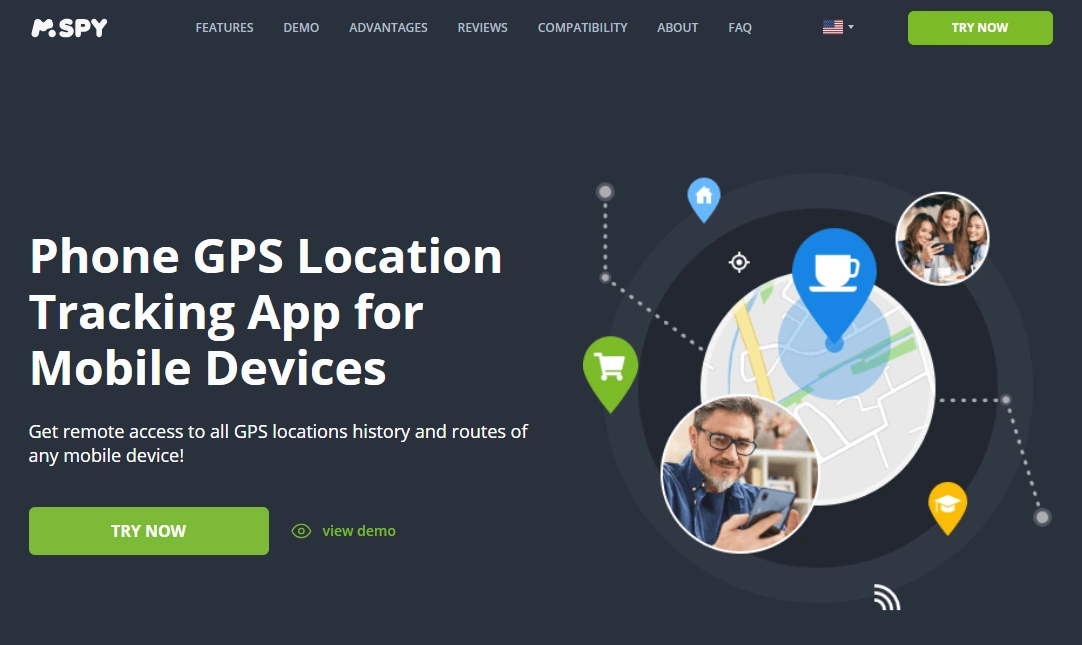
mSpy is a strong choice if you want GPS tracking as part of a broader family safety setup. It’s best when you care about reliability and you want more than a basic locator app.
Product highlights
- GPS tracking as part of an all-in-one monitoring suite
- Good for parents managing multiple “risk channels” (not just location)
- Best results with stable setup and post-update checks
What’s to like
- Best overall pick if GPS is only one part of what you need
- Works well for ongoing safety routines
What’s not to like
- More features than some families want
- As with all GPS tools, indoor accuracy can drift
PROS
- Strong “overall” value if you want more than a map pin
- Great for long-term parent oversight routines
CONS
- Not the simplest option if you only want “find my phone”
- Requires basic maintenance after major updates
uMobix — GPS Cell Phone Locator
Description
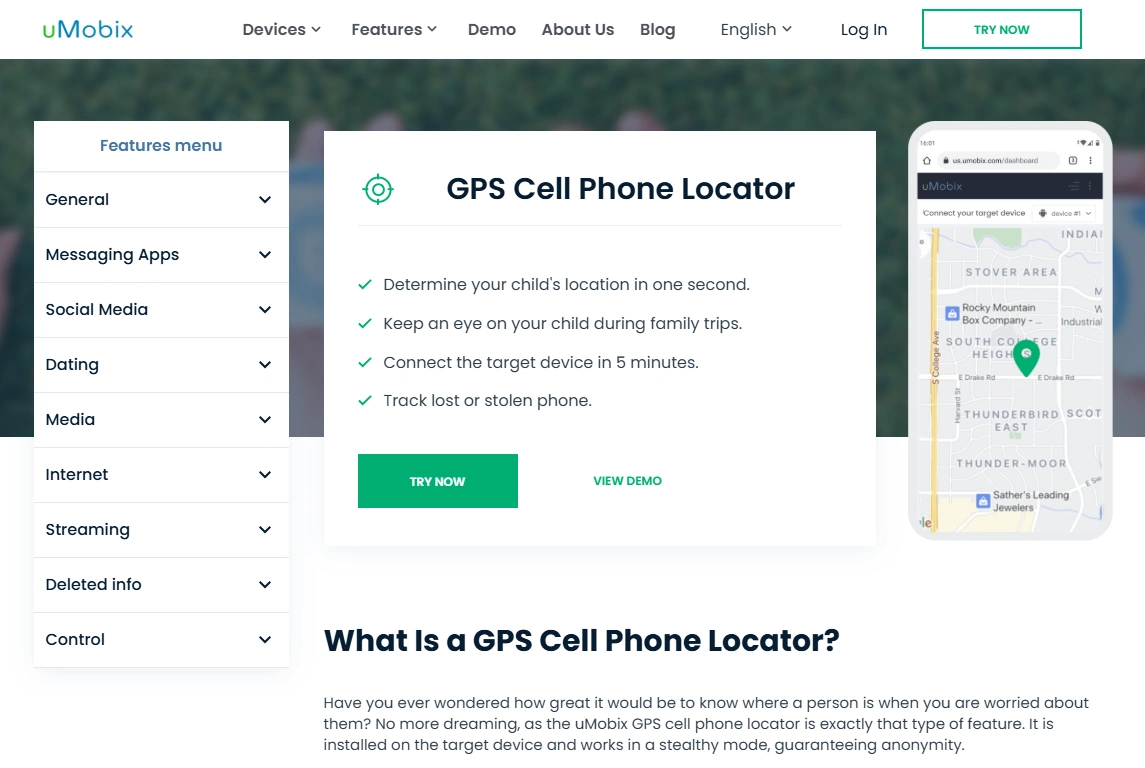
uMobix fits best when your main goal is straightforward: a phone-locator style experience that helps you keep tabs on location without building a whole “suite” strategy.
Product highlights
- Locator-style positioning
- Good for parents who primarily want location visibility
- Best when device access stays stable
What’s to like
- Best pick if you want a locator-first approach
- Good for daily checks and “is everything ok?” moments
What’s not to like
- Still subject to OS background restrictions and update issues
- Indoor accuracy can vary (normal GPS limitation)
PROS
- Strong “locator” fit
- Simple to understand as a parent use case
CONS
- Needs stable setup to avoid syncing gaps
- Not a full parental-control ecosystem on its own
Eyezy — GPS Tracking
Description
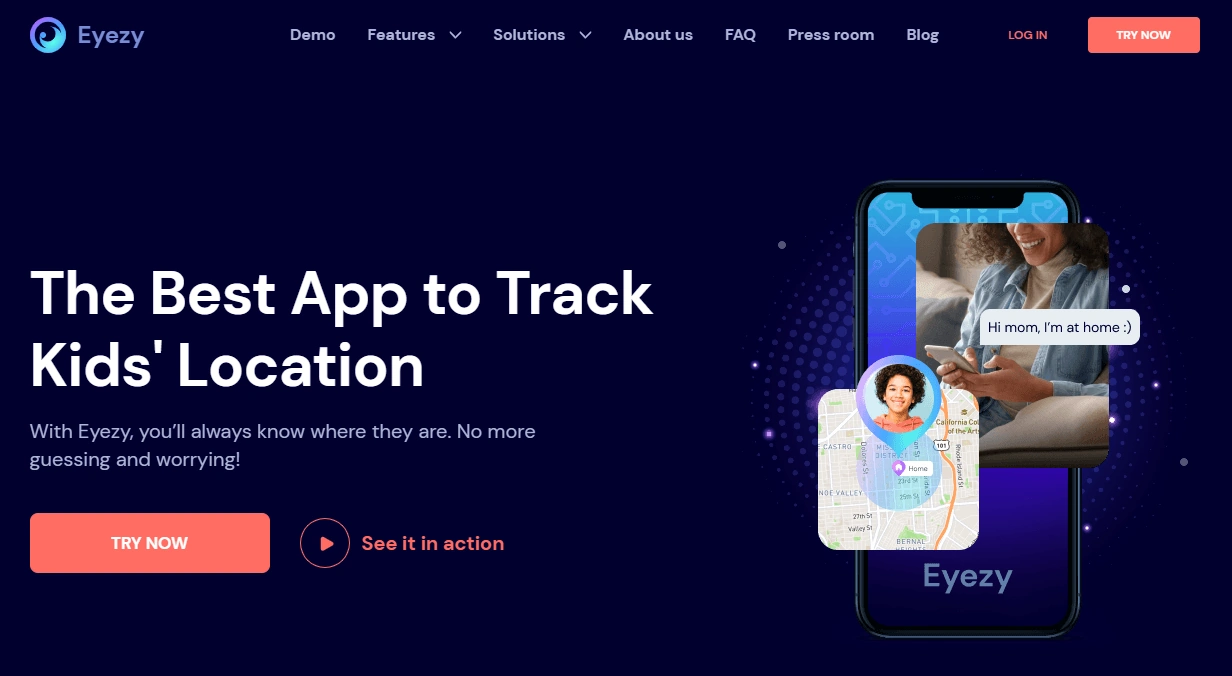
Eyezy is a great choice if you want GPS tracking that feels simple to check daily. It’s often the most parent-friendly pick for families who don’t want a complicated dashboard.
Product highlights
- GPS tracking with an easy-to-check dashboard
- Good for calmer “daily routine” oversight
- Best with stable access and quick post-update checks
What’s to like
- Parent-friendly feel
- Great if you want fewer settings and less overwhelm
What’s not to like
- Doesn’t change GPS physics: indoor accuracy can drift
- Reliability depends on stable setup
PROS
- Easy to use
- Great “check the map” routine
CONS
- Not the best fit if you want advanced “suite” features
- Updates can require quick maintenance checks
Spynger — GPS Tracker
Description
Spynger is a solid “lightweight alternative” if you want GPS tracking without committing to a bigger suite. It’s best for families who need a simpler option and can keep setup stable.
Product highlights
- GPS tracker positioning
- Good backup pick for simpler needs
- Works best with consistent device access
What’s to like
- Simple alternative option
- Good for basic location visibility
What’s not to like
- Stability can vary more depending on setup
- Not the best if you want broader family safety features
PROS
- Lightweight alternative
- Easy to position as “GPS-only-ish”
CONS
- Needs stable setup
- Not a full family safety suite
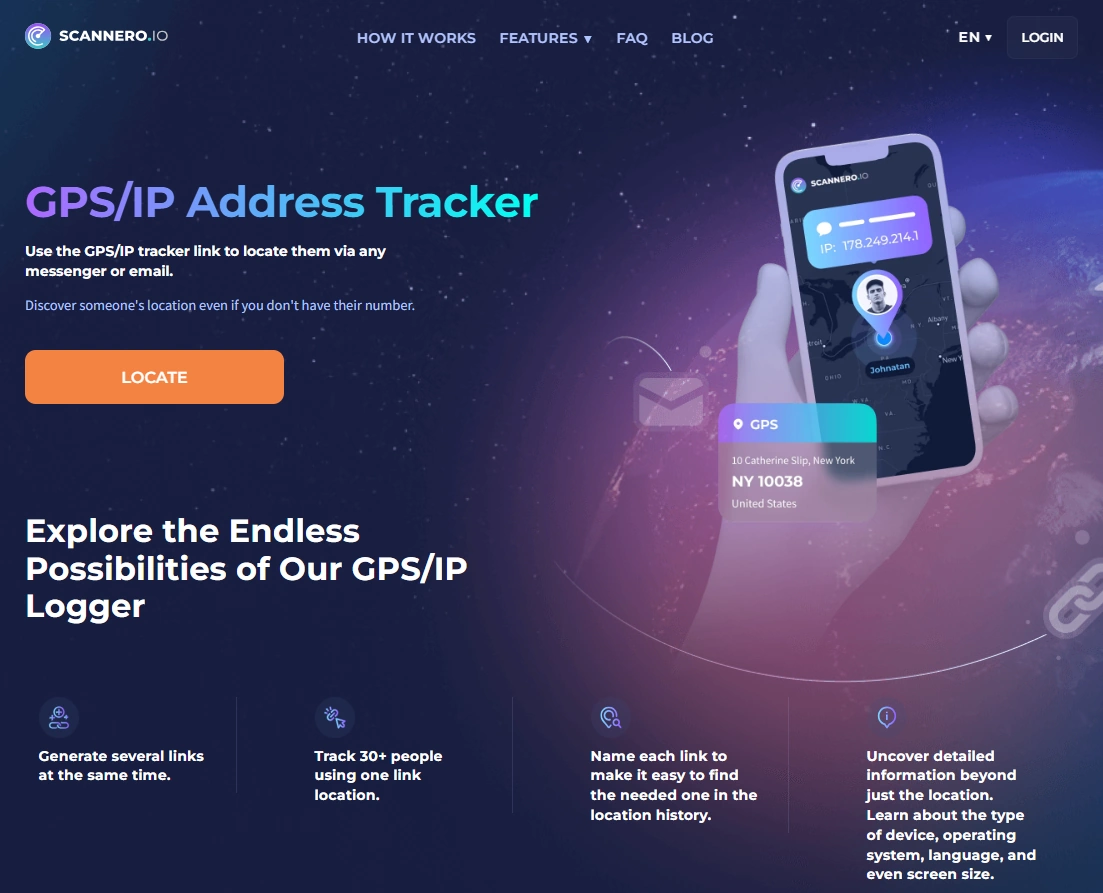
Scannero — GPS/IP Address Tracker
Description
Scannero is best thought of as a quick lookup-style option rather than a full parental control suite. It can fit if your goal is a fast “check” approach and you don’t need a big dashboard.
Product highlights
- GPS/IP tracker positioning
- Fast “check” style use case
- Not a full family safety suite
What’s to like
- Simple, quick use case
- Good for one-off checks
What’s not to like
- Not a full-time family locator routine by itself
- Not a kid-first parental control approach
PROS
- Fast option for quick needs
- Simple to understand
CONS
- Not an all-in-one family tracker
- Not designed for ongoing parental routines
Bark — parental control (safest kid-first alternative)
Description
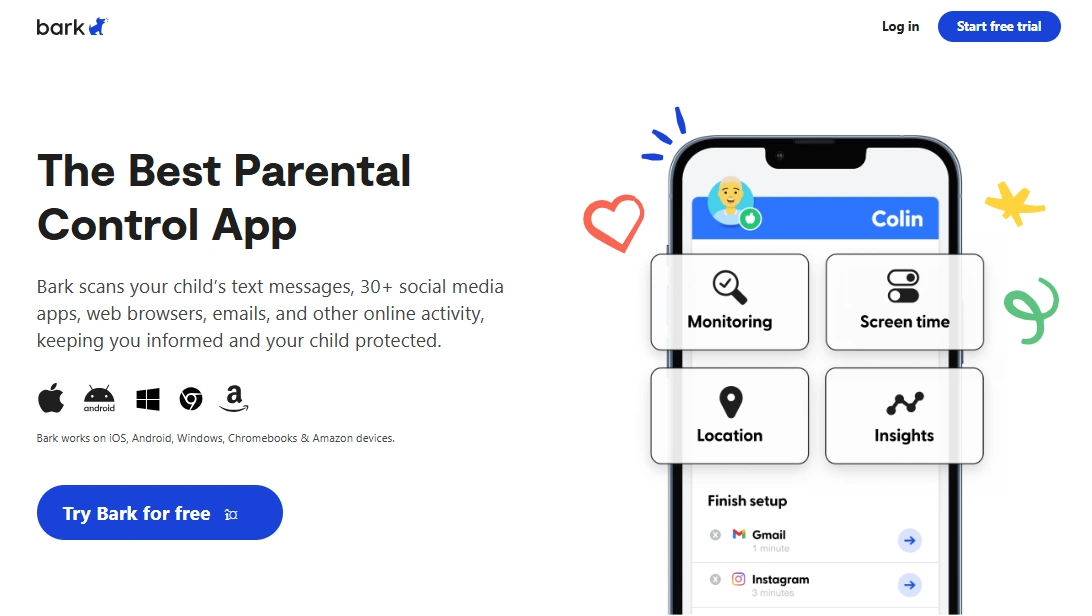
If your goal is child safety first (especially for younger kids), Bark is often the healthiest approach. It’s less about “pure GPS tracking” and more about boundaries, prevention, and a calmer family routine.
Product highlights
- Prevention-first family safety approach
- Great for building boundaries around device use
- Pairs well with a location-sharing routine
What’s to like
- Safest overall vibe for families
- Great if you want less conflict and more prevention
What’s not to like
- Not a pure GPS tracker app focus
- May feel too “parental control” if you only wanted a map pin
PROS
- Kid-first approach
- Great for long-term safety habits
CONS
- Not positioned as a GPS-only tool
- Some families want a simpler locator-only option
Legal notes
Use GPS tracking only when you’re legally authorized—typically for your own device, a lost device you own, or your minor child’s device that you manage as a parent/guardian. Tracking other adults without consent may be illegal and harmful.
FAQ
What’s the best GPS tracker app for Android and iPhone?
If you want GPS tracking as part of a broader safety toolkit, mSpy is a strong overall pick. If you want a straightforward locator feel, uMobix is often the best fit. If you want the simplest daily dashboard experience, Eyezy is a great option.
Why does GPS location sometimes look wrong indoors?
Indoors, GPS can drift and rely more on Wi-Fi and cell towers. Small jumps on the map are normal—use GPS for big-picture locations, not centimeter-level accuracy.
Do GPS tracker apps work better on Android or iPhone?
Android is usually easier to keep stable once permissions and battery/background restrictions are configured. iPhone tracking is often more dependent on keeping access stable and checking after major OS updates.
Will GPS tracking drain the battery?
More frequent updates generally mean more battery usage. If battery becomes an issue, reduce update frequency (if available) and make sure background settings are configured correctly.
What should I do first if a phone is lost or stolen?
Use the built-in find tools immediately (Apple/Google), lock or mark the device as lost if possible, and avoid confrontation if theft is likely. See: best apps to find a lost or stolen phone.