

Data leaks don’t only happen through “hackers.” Many real-world leaks happen through everyday employee behavior: lost phones, risky apps, weak passwords, shared accounts, screenshots, forwarded files, and sensitive messages sent to the wrong place.
That’s why some companies look at employee monitoring apps for leak prevention. The problem: if you monitor the wrong way, you create legal risk, destroy trust, and collect data you can’t justify.
This guide shows a legal + ethical approach for company-owned phones (or clearly managed devices), with clear notice, tight scope, and minimised collection.
Quick shortlist (company-owned devices only): Moniterro (balanced), FlexiSPY (advanced features—use strict minimisation), Spyera (alternative to compare).
Quick jump: Checklist · What “monitoring apps” mean in business · Legal & ethical framework · What to monitor (leak prevention) · What to avoid · Best tools compared · Reviews · Rollout playbook · FAQ
Start with these internal guides: Legal Phone Tracking: What’s Allowed and What’s Not · How to Monitor Work Phones Ethically · Best Employee Monitoring Apps (Legal & Ethical)
60-second “don’t get this wrong” checklist
- Use company-owned devices: BYOD is higher-risk and needs a tighter “work profile only” approach.
- Write the purpose: leak prevention / security / compliance — not “we want to watch everyone.”
- Choose the least invasive method: metadata + security signals before content capture.
- Be transparent: employees must know what is monitored, why, when, retention, and who can access it.
- Limit scope: work hours and work apps where possible; avoid off-hours and private communications.
- Access controls: log access, restrict roles, and keep retention short.
- Document decisions: policy + DPIA/assessment + incident workflow.
Related: Legal Phone Monitoring for Employees (Company Phones vs Personal Phones)
What “monitoring apps” mean in business (and what they shouldn’t mean)
In a business context, “monitoring app” usually refers to a monitoring tool that can collect device activity (varies by platform). Used responsibly, this is about:
- Security: detecting risky apps, suspicious device states, and potential data exfil patterns
- Incident response: faster action when a phone is lost, compromised, or misused
- Compliance: proving reasonable controls exist for sensitive data
It should not be about reading private messages “just because you can.” The more your setup looks like surveillance, the harder it is to justify legally and culturally.
If your goal is strictly leak prevention, also read: How to Prevent Employee Data Leaks with Monitoring Software.
The legal + ethical framework (simple rules that keep you safe)
1) Purpose + necessity
Write a concrete purpose (e.g., “protect client data on company phones” or “reduce insider leak risk”) and choose controls that are necessary for that purpose.
2) Proportionality
Match monitoring intensity to risk. A low-risk role shouldn’t get high-intensity monitoring.
3) Transparency
Employees should understand what is monitored, when, and why. Hidden monitoring is the fastest path to disputes and regulatory problems.
4) Data minimisation
Prefer signals (security posture, app inventory, access events) over content (message text, screenshots, keylogging) unless you have a documented exceptional need.
5) Access control + retention limits
Limit who can view data, log access, and set short retention. If you can’t justify keeping it, don’t store it.
6) Separate roles (IT vs HR vs managers)
Most companies should restrict raw data to IT/security/HR. Managers usually only need aggregated, purpose-limited reporting.
7) Employee rights + escalation path
Have a clear process: requests, disputes, incident investigations, and approvals for any “deeper” access.
What companies monitor to prevent data leaks (legally)
Leak prevention works best when you target risk indicators instead of trying to capture everything.
Security posture signals (best ROI)
- Risky device state indicators (e.g., jailbreak/root signals, unsafe settings)
- Installed app inventory (block risky tools by policy)
- OS update status and security hygiene
- Corporate account access signals (suspicious login patterns, abnormal access timing)
Work-context telemetry (use carefully)
- Location during work hours for field teams (safety/logistics)
- Work-app usage categories (not private content)
- Policy violations (installing prohibited apps, disabling protections)
If you need a “policy-first” blueprint, use: How to Monitor Work Phones Ethically.
What to avoid (the fastest ways to create legal + trust issues)
- Always-on microphone/camera or anything that feels like constant surveillance
- Keylogging by default across the whole day (treat as exceptional, not baseline)
- Reading private messages unless you have a strict, documented incident-only process
- Off-hours tracking unless there is a very clear safety rationale and explicit boundaries
- BYOD “full device” monitoring (if BYOD is necessary, use work-profile boundaries and minimise scope)
For the boundary lines and wording ideas, see: Company Phones vs Personal Phones (Legal Guide).
Best employee monitoring apps for leak prevention (company-owned phones)
| App | Best for | Platforms | When it’s an ethical fit |
|---|---|---|---|
| Moniterro | Balanced company-phone monitoring with reasonable scope | Android, iPhone | Security + compliance + incident response with minimised collection |
| FlexiSPY | Advanced features (high control) | Android, iPhone | Only with strict governance; avoid “collect everything” defaults |
| Spyera | Comparison option for narrow, documented needs | Android, iPhone | Best for approved, purpose-limited monitoring on company devices |
If you want the broader shortlist, see: Best Employee Monitoring Apps (Legal & Ethical).
Reviews (leak-prevention perspective)
Moniterro — best “balanced” option for leak prevention policies
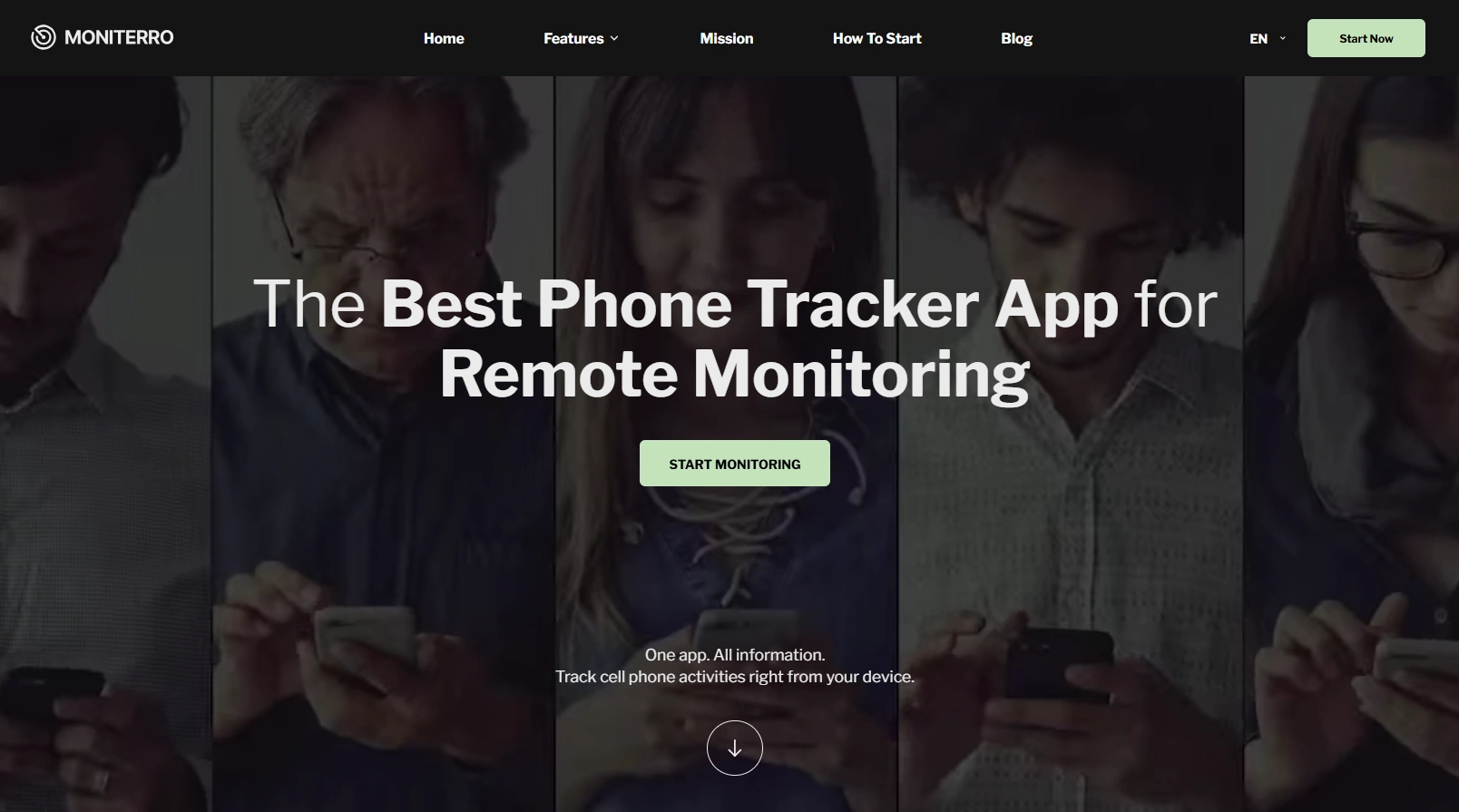
Description: Moniterro is a practical pick when you want company-phone monitoring to support security and compliance without turning the workplace into surveillance culture.
Product highlights:
- Cross-platform (Android + iPhone)
- Works well for “policy + incident response” workflows
- Best fit when you focus on security posture and violations, not private content
What’s to like
- Good for leak-prevention programs that prioritise minimisation
- Useful as a single dashboard for multiple company devices
What’s not to like
- If you try to monitor everything, you create risk and pushback
- iPhone restrictions may limit what’s possible compared to Android
PROS
- Balanced approach potential
- Good fit for clear company policies
CONS
- Needs policy + access control to stay ethical
- Not a substitute for security training and MDM-style controls
FlexiSPY — advanced features (use only with strict minimisation)
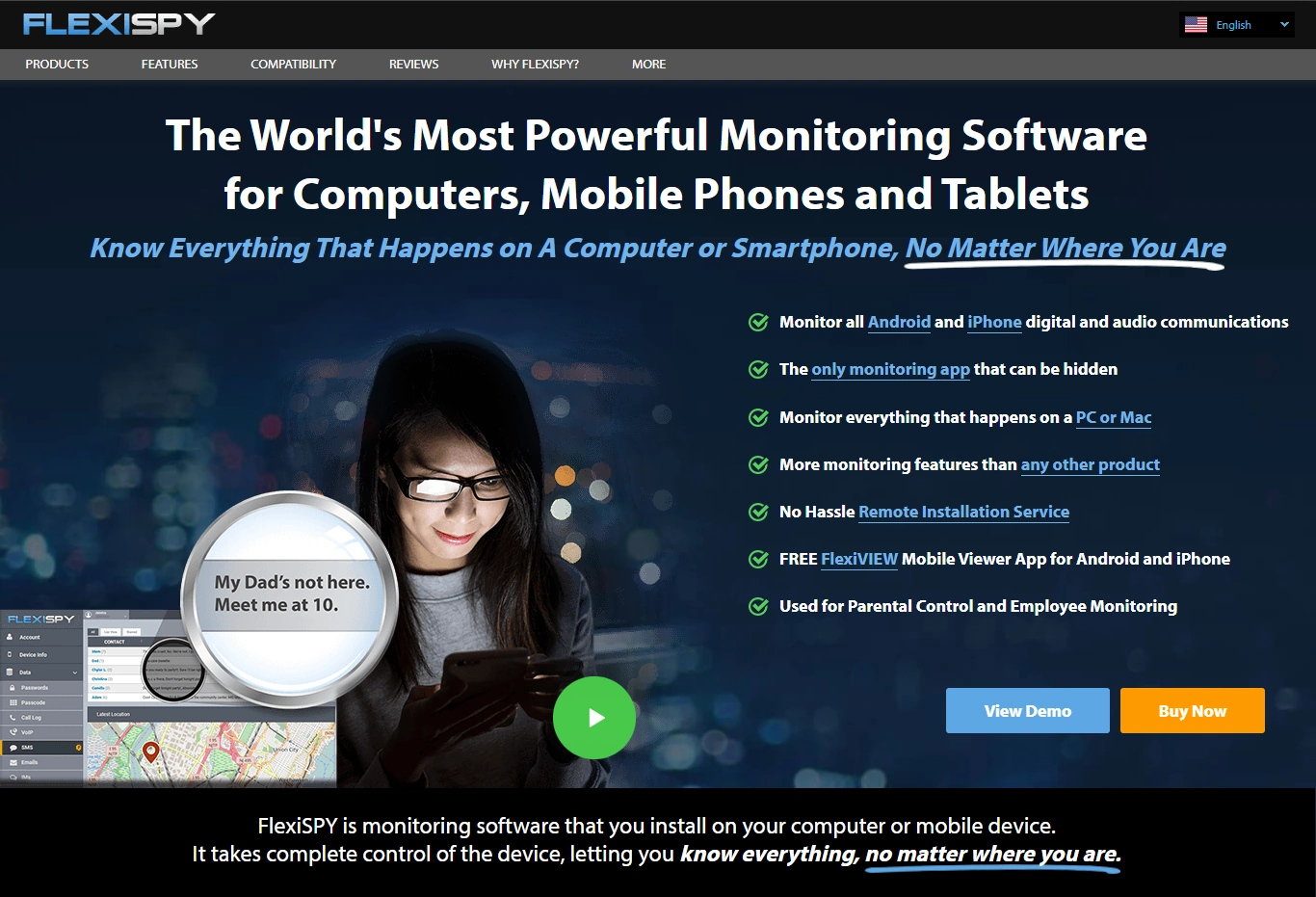
Description: FlexiSPY is known for powerful capabilities. For leak prevention, that can be useful only if your company has a strong governance model and strict limits (otherwise it’s easy to over-collect).
Product highlights:
- Advanced feature set (varies by platform)
- Better suited to incident-only or high-risk roles
- Requires strict policy gates and approvals
What’s to like
- Fits high-risk environments where controls must be strong
- Can support investigations when properly governed
What’s not to like
- Easy to misuse if you don’t restrict scope
- Can damage trust if used as daily surveillance
PROS
- High control potential
- Useful for narrow, documented security goals
CONS
- High governance requirement
- Higher cultural risk if rolled out poorly
Spyera — comparison alternative for approved, narrow monitoring
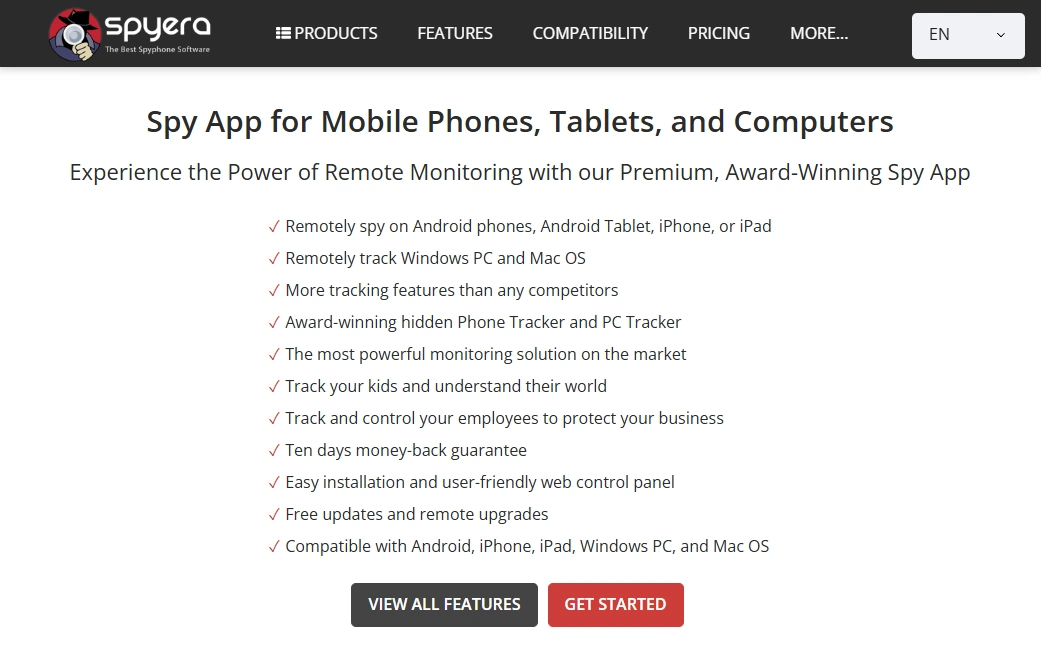
Description: Spyera can be a comparison option if you’re shortlisting tools for company-owned phones. The same rule applies: keep monitoring purpose-limited and transparent.
Product highlights:
- Cross-platform availability
- Useful for narrow, documented needs
- Best paired with strict access and short retention
What’s to like
- Good to compare fit and pricing
- Works when your policy is tight and clear
What’s not to like
- Not a replacement for MDM/DLP controls
- Still creates trust risk if used too broadly
PROS
- Solid shortlist candidate
- Cross-platform
CONS
- Must be governed carefully
- BYOD scenarios are risky
Rollout playbook (legal + ethical, leak-prevention focused)
Step 1: write a 1-page monitoring policy
- Purpose (leak prevention/security) + scope (company devices)
- What is monitored (categories) and what is not monitored (red lines)
- Work hours vs off-hours rules
- Retention period and access roles
- Incident process (who approves deeper review and when)
Step 2: run an internal impact assessment
Document risks, alternatives considered, and why your approach is proportionate. (This is also where you decide which monitoring is “baseline” vs “incident-only.”)
Step 3: implement “least invasive by default”
- Start with security posture + policy violations
- Only add deeper monitoring if a specific risk demands it
- Keep access limited and logged
Step 4: employee onboarding (the trust part)
- Explain why the company is doing this (data protection, client trust, compliance)
- Explain what is not monitored
- Explain how employees can raise concerns
Need a more detailed structure and wording ideas? How to Monitor Work Phones Ethically.
FAQ
Is it legal for companies to use “monitoring apps” to prevent data leaks?
It can be, if monitoring is transparent, purpose-limited, and proportionate—especially on company-owned devices. The safest approach is to monitor security signals and policy violations rather than private content.
Do we need employee consent?
Many companies rely on a documented lawful basis plus clear notice and proportionality. In workplace contexts, “consent” can be complicated because employees may feel pressured—so transparency and minimisation matter a lot.
Should we monitor personal (BYOD) phones?
BYOD monitoring is much riskier. If you must support BYOD, restrict monitoring to work profiles and minimise collection. Many organisations choose company-owned devices for roles that require monitoring.
What’s the most defensible monitoring approach for leak prevention?
Start with device security posture, app inventory policy, and incident response workflows. Add deeper monitoring only for documented high-risk roles or specific incidents, with strict approvals and short retention.
Which tool should we start with?
If you want a balanced option, start with Moniterro. If you need advanced capabilities and have strong governance, compare FlexiSPY. For a comparison shortlist option, consider Spyera.