

Website blocking is one of those parental-control features that sounds easy… until real life hits: kids switch browsers, use in-app browsers, turn on VPNs, or discover “secure DNS” settings you didn’t even know existed.
In this uMobix review, we focus on what parents actually care about: URL filters, category blocking (adult/gambling/etc.), how reliable it is on Android vs iPhone, and what you can do to reduce bypassing.
If you’re comparing tools, start here: best website blocking apps for Android and iPhone.
Short on time? Quick verdict
- Best for: parents who want a practical web-filter layer plus a broader monitoring/control workflow, especially on Android.
- What uMobix does well: a “parent dashboard” approach—useful for spotting risky browsing patterns and tightening rules over time.
- Where it can struggle: strict “blocked means blocked” enforcement depends on device and setup—kids can bypass weak setups with VPN/DNS/new browsers.
- If you need strict website blocking: Eyezy’s Website Blocker is usually the stronger enforcement-style option.
Quick jump: 60-sec checklist · Verdict · Comparison table · What really matters · Best for your situation · Setup tips · Reviews · Legal notes · FAQ
60-second decision checklist
- What are you blocking? Adult content only, categories (gambling/social), or specific URLs.
- How strict do you need it? If your kid actively bypasses rules, pick an enforcement-heavy option (Eyezy).
- Android vs iPhone: Android is typically more flexible for stronger control-style setups.
- Plan for bypassing: test VPN, secure/private DNS, new browsers, and in-app browsers.
- Make it livable: combine filtering with routines (downtime + homework window) to cut conflict.
Verdict: is uMobix good for website blocking?
uMobix can work well as a web-filter layer when your goal is to reduce exposure and keep an eye on patterns, especially if you’re already using uMobix for broader parental monitoring.
If your #1 priority is strict website enforcement (kids constantly trying to bypass), a dedicated enforcement-style blocker like Eyezy’s web filter is often the better fit.
If you want the easiest long-term family setup that blends routines + safety, Bark is usually the most “livable” choice (less daily fighting). See: Bark web filtering review.
Comparison table: uMobix vs top website blocking alternatives
This comparison focuses on real parenting outcomes: filtering strength, bypass resistance, and how easy it is to manage week after week.
| App | Best on | Blocking style | Bypass resistance | Best for |
|---|---|---|---|---|
| uMobix | Android (stronger), iPhone (varies) | URL/category-style + monitoring workflow | Mid (setup-dependent) | Parents who want dashboard + patterns |
| Eyezy Website Blocker | Android + iPhone (varies) | Enforcement-first web filtering | High | Techy kids / strict rules |
| Bark | Android + iPhone | Family rules + safety approach | Good (best with routines) | Best overall long-term family fit |
| Parentaler | Android + iPhone (separate offers) | Simple web filtering | Mid | Non-techy parents (simple setup) |
| mSpy Porn Blocker | Android + iPhone | Adult-content focus | Mid | Reduce adult-site exposure |
What really matters (URL filters, categories, Android vs iPhone, reliability)
1) URL blocking vs category blocking
- URL blocking is best when you have a short list of specific sites you want to block.
- Category blocking is best for broad protection (adult, gambling, harmful content) and covers 80% of the problem with less maintenance.
For a broader comparison across tools, see: best website blocking apps.
2) “Web filtering” is only as strong as your bypass defenses
Most bypassing happens through a few predictable paths:
- Installing a new browser
- Using a VPN
- Enabling private/secure DNS
- Opening links inside apps (in-app browsers)
If strict enforcement is your priority, read: how to block inappropriate websites on Android with Eyezy.
3) Android vs iPhone expectations
- Android: typically more flexible for stronger enforcement-style setups.
- iPhone: capabilities can be more method/device dependent—test early and keep the system simple.
If you’re setting up iPhone monitoring safely, see: how to set up an iPhone monitoring app safely and legally.
4) Combine website blocking with routines
Filtering reduces exposure, but routines reduce conflict. The simplest routine that works for most families:
- Night downtime
- Homework window (allow school apps, restrict distractions)
Related guides: best screen time control apps for kids’ phones · uMobix screen time review
Best for your situation
- I want a uMobix-style parent dashboard + web filtering layer: uMobix
- My kid is techy and bypasses filters: Eyezy Website Blocker
- I want the easiest long-term family system: Bark
- I’m non-techy and want simple web filtering: Parentaler
- I mainly want adult-site exposure reduction: mSpy Porn Blocker
Setup tips (so uMobix web blocking doesn’t get bypassed)
Tip 1: Start with categories, then add a short URL list
Use broad categories for coverage. Then add specific sites only when you see a repeated problem pattern.
Tip 2: Test the 4 bypass basics in the first 48 hours
- Install a second browser
- Turn on a VPN
- Enable “private DNS / secure DNS”
- Open links inside social apps (in-app browser)
Tip 3: Pair with screen time routines
Web blocking alone won’t stop late-night scrolling. Add downtime schedules and a homework window. If you want the routine blueprint, start here: screen time control apps for kids.
Tip 4: Keep essentials always allowed
Rules stick better when kids can still function. Keep calls, navigation, school portals, and family messaging available.
Reviews
uMobix (URL filters + category blocking workflow)

Description
uMobix is best viewed as a practical parent dashboard: you use it to understand behavior patterns and then tighten web filtering and routines based on what’s actually happening. For website blocking, it can be effective—especially on Android—when you pair it with bypass defenses and simple family rules.
Product highlights
- Parent dashboard workflow (useful for pattern spotting)
- Web-filter layer (URL/category-style approach depending on setup)
- Pairs well with screen time routines and weekly reviews
What’s to like
- Practical for “busy parent” monitoring + adjustment
- Works well as a system (filter + routines + review)
- Strongest results typically come from Android setups
What’s not to like
- Strict enforcement depends on setup—kids can bypass weak configurations
- iPhone expectations can vary; always test early
PROS
- Good balance of monitoring + practical controls
- Useful for long-term “adjust based on reality” parenting
CONS
- Not the most enforcement-heavy web blocker
Try uMobix: Get uMobix · Official page
Eyezy Website Blocker (stricter enforcement alternative)
Description
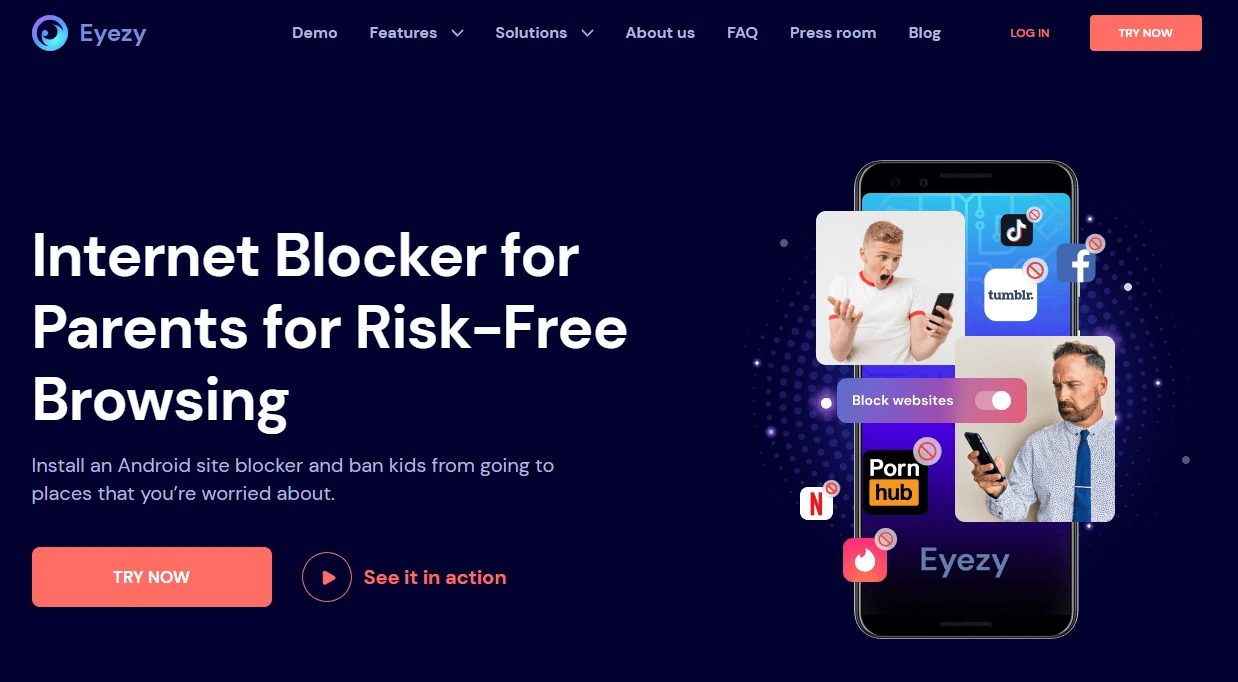
If your kid actively bypasses rules, Eyezy is usually the stronger pick for website blocking. It’s enforcement-first, meaning it’s designed to feel more like “blocked means blocked,” not “blocked unless the kid is clever.”
Product highlights
- Enforcement-first website blocking
- Better fit for bypass-prone situations
- Strong option when strict rules are required
What’s to like
- Stronger “strict blocker” feel
- Great for techy kids who test boundaries
What’s not to like
- Heavier tool than “simple filters” solutions
- iPhone behavior can be method-dependent—test early
PROS
- Best strict website blocking alternative
- Higher bypass resistance
CONS
- More settings/complexity than lightweight tools
Try Eyezy: Website Blocker · Setup guide
Bark (best “family rules + safety” long-term choice)
Description
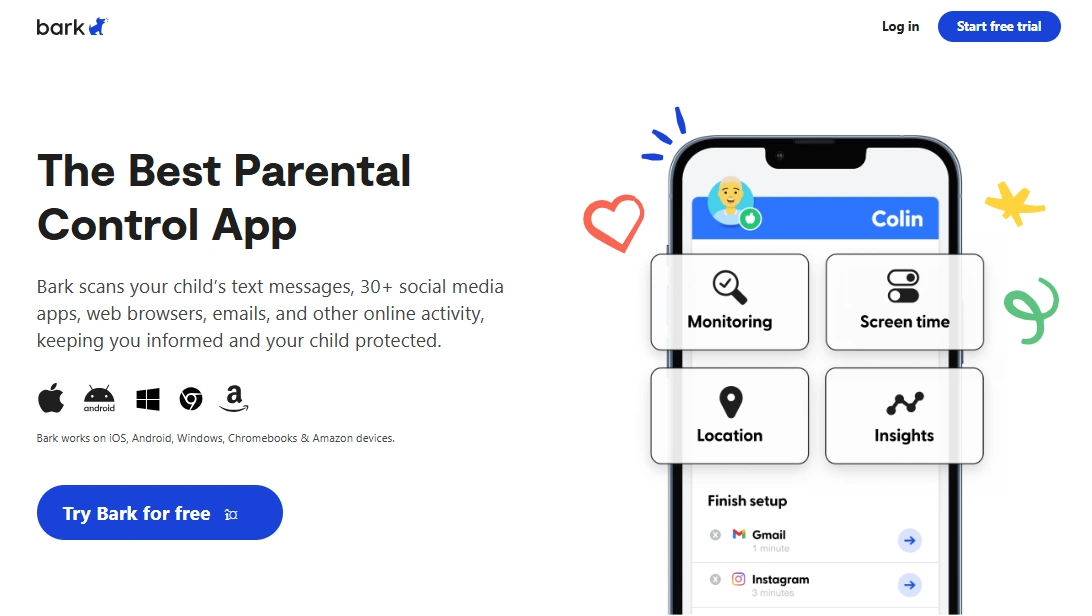
Bark is often the easiest tool to live with long-term. For website blocking, it works best when paired with routines (downtime + homework window). If you want fewer daily fights and a calmer system, Bark is usually the best overall pick.
Product highlights
- Family rules approach (easy to maintain)
- Strong “safety + routine” ecosystem
- Good fit for most families
What’s to like
- Best overall family fit (less conflict)
- Works well for kids and teens when rules are consistent
What’s not to like
- If you need strict enforcement above all, Eyezy can feel stronger
PROS
- Best overall alternative
- Strong long-term usability
CONS
- Not the strictest lock-down blocker
Try Bark: Get Bark · Read the full review
Parentaler (simple web filtering for non-techy parents)
Android: Parentaler Web Filtering Android
iPhone: Parentaler Web Filtering iPhone
Description
Parentaler is a solid “simple filters” option. It’s best for families that want basic protection without a heavy dashboard and where the child isn’t constantly trying to bypass rules.
Product highlights
- Simple web filtering options (Android + iPhone)
- Lower maintenance setup
- Good starter choice for basic website blocking
What’s to like
- Quick setup and low settings fatigue
- Works well with simple family routines
What’s not to like
- Not ideal for strict enforcement needs
- Bypass resistance depends heavily on correct setup
PROS
- Best for non-techy parents
- Simple to maintain
CONS
- May be too light for techy kids
Try Parentaler: Android · iPhone · Read the full review
mSpy Porn Blocker (focused adult-site blocking)
Description
If your main concern is adult-content exposure, mSpy’s Porn Blocker is a focused option that can add an extra layer of protection. It works best as part of a broader routine system (downtime + conversations), not as a complete “block everything” solution.
Product highlights
- Adult-site exposure reduction focus
- Useful extra layer alongside screen time routines
- Good add-on protection for risky browsing
What’s to like
- Clear, focused use-case
- Simple “add-on” protection layer
What’s not to like
- Not a full category blocker for every distraction type
- Still needs strong device rules to reduce bypassing
PROS
- Strong adult-content focus
- Good supplementary protection
CONS
- Not an all-in-one family rules system
Try mSpy Porn Blocker: Get it here · Read the web blocking review
Legal notes
Use website blocking and parental control tools only on devices you own, devices you manage (for example, your child’s phone under your care), or where you have clear consent. Monitoring or controlling someone else’s device without permission can be illegal.
Practical overview: legal phone tracking: what’s allowed and what’s not.
FAQ
Does uMobix block websites by URL or by categories?
It’s best to think of uMobix as a web-filter layer combined with a parent dashboard workflow. Depending on your device and setup method, it may support URL-based restrictions and broader category-style filtering approaches.
Is uMobix website blocking better on Android or iPhone?
Android is typically more flexible for stronger enforcement-style control. On iPhone, results can be more method/device dependent, so you should test early and keep your rules simple.
How do kids bypass website blockers?
The most common bypass methods are installing a new browser, using a VPN, enabling secure/private DNS, and opening links inside apps (in-app browsers). Testing these in the first 48 hours helps you close obvious loopholes.
What’s the best strict alternative to uMobix for website blocking?
If your #1 priority is strict enforcement, Eyezy Website Blocker is usually the stronger pick—especially for techy kids who actively test boundaries.
Should I combine website blocking with screen time limits?
Yes. Website blocking reduces exposure, but screen time routines reduce conflict and late-night scrolling. The best setup for most families is filtering + downtime schedules + weekly review.
Is it legal to block websites on my child’s phone?
Laws vary by country, but parents commonly manage a minor child’s device they own or administer. Using these tools on other adults or devices you don’t control without consent can be illegal.