

Kids spend more time than ever on phones — TikTok, YouTube, Snapchat, Discord, gaming chats, and private DMs. A good parental control app helps you set limits, block unsafe content, track location, and catch risky behavior early (without turning your home into a surveillance state).
This guide ranks the best parental control apps for 2026 based on practical family use: setup difficulty, day-to-day reliability, safety features, iPhone/Android compatibility, and how well each app fits different ages.
Short on time? Quick picks (2026)
- Eyezy — best overall for most families (balanced features + easy dashboard)
- mSpy — best for teens & deeper social monitoring (when you need more visibility)
- uMobix — best for fast, real-time style updates (especially Android-heavy homes)
- Bark — best “alerts-first” safety approach (bullying/self-harm/predator signals)
- Parentaler — best simple controls for younger kids (screen time + basic safety)
Want to go deeper? See our full feature breakdown here: Parental Control & Spy Apps Comparison Table .
Comparison Table (2026): Best Parental Control Apps
| App | Best for | Platforms | Key highlights | Refund or Trial |
|---|---|---|---|---|
| Eyezy | Most families (balanced control + visibility) | iPhone, Android | Clean dashboard, location + geofencing, web/app insights, alerts | Refund policy varies by plan; check terms at checkout |
| mSpy | Teens & social-heavy use | iPhone, Android | Stronger “visibility” toolkit, social monitoring focus, location, web activity | Refund policy varies by plan; check terms at checkout |
| uMobix | Fast updates & Android performance | iPhone, Android | Quick syncing, detailed activity overview, location tracking | Refund policy varies by plan; check terms at checkout |
| Bark | Safety alerts over “reading everything” | iPhone, Android | AI-style risk alerts (bullying/self-harm/predators), family conversation-friendly | Refund policy varies by plan; check terms at checkout |
| Parentaler | Younger kids & simple controls | iPhone, Android | Easy setup, screen time basics, web filtering direction, location tools | Refund policy varies by plan; check terms at checkout |
How to choose the right parental control app
If you’re unsure, choose based on age + risk + how much visibility you actually need. This step-by-step guide helps: How to Choose the Right Monitoring App for Your Family .
- Ages 6–10: prioritize screen time limits, web filtering, and location safety.
- Ages 10–13: add social app awareness and stronger alerts.
- Ages 13–17: focus on risky content detection + social platform coverage.
Top parental control apps (detailed reviews)
1) Eyezy — best overall for most families (2026)
Eyezy is the “best for most families” pick because it balances safety controls with visibility — without feeling overly complex. It’s a strong starting point if you want one tool that does a bit of everything.
- Location tracking + geofencing-style awareness
- Useful activity insights for everyday parenting decisions
- Beginner-friendly dashboard (good for non-tech parents)
- Works across iPhone and Android (expect iOS limits vs Android depth)
PROS
- Easy to understand and manage daily
- Good “all-round” family safety coverage
- Solid option for mixed-device households
CONS
- iPhone monitoring is naturally more limited than Android (iOS restrictions)
- May be more “visibility” than you need for very young kids
Ready to start with Eyezy? Try Eyezy Parental Control .
2) mSpy — deeper visibility for social-heavy teens (2026)
mSpy is the pick when you need more visibility — especially for teens who live in social apps and messaging. It’s often chosen by parents dealing with high-risk situations (bullying, secrecy, unsafe contacts) where basic controls aren’t enough.
- Stronger monitoring depth for social-heavy teen use
- Location tools to support real-world safety
- Useful when you need to verify concerns (not guess)
- Works on iPhone and Android (Android usually offers deeper coverage)
PROS
- Great fit for teens and higher-risk scenarios
- Broad feature coverage compared to simpler tools
- Often replaces “multiple apps” with one dashboard
CONS
- Can be overkill for younger kids if you only want screen time + filters
- Like all tools, feature depth varies by device/OS version
Want an all-round option with deeper visibility? Start with mSpy Parental Control App .
3) uMobix — fast, real-time feel (especially on Android)

uMobix is popular for parents who care about speed — frequent updates and a real-time feel, especially on Android devices. If you’ve tried tools that felt slow or stale, uMobix tends to be the “faster dashboard” choice.
- Fast syncing / frequent updates (device-dependent)
- Strong Android experience for many families
- Useful for social app activity awareness
- Location tracking for everyday safety
PROS
- Great for parents who want timely visibility
- Often performs best in Android-first households
- Simple to check and act (less “digging”)
CONS
- iPhone data availability can be more limited than Android
- Not the most “gentle” option for younger kids
Need faster updates? Try uMobix Parental Control .
4) Bark — alerts-first safety model
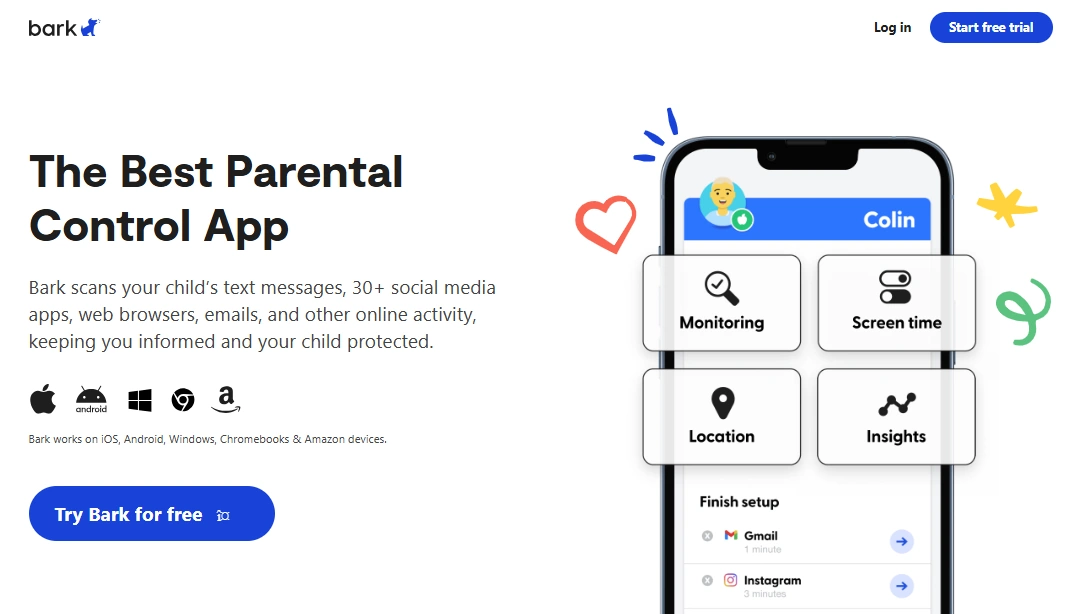
Bark is different: it’s built for families who want risk alerts and coaching instead of reading every message. It’s a strong fit when you want to protect mental health and spot danger signals early — while keeping the relationship with your child intact.
- Alerts for harmful content patterns (bullying, self-harm, predators)
- Encourages open parent-child conversations
- Good for teens with heavy social media use
- Designed to be “safety-first,” not stealth-first
PROS
- Best “alerts-first” model for many families
- Strong for emotional safety monitoring
- Less invasive than full chat-log approaches
CONS
- Not ideal if you need strict app blocking for younger kids
- May not provide the same level of raw visibility as deeper tools
Prefer alerts over surveillance? Get started with Bark .
5) Parentaler — simple controls for younger kids
Parentaler is the “simple and parent-friendly” option — best when your goal is everyday structure: screen time limits, basic monitoring, and safer browsing for younger kids.
- Straightforward setup and dashboard
- Better fit for younger kids (roughly 6–13)
- Focus on daily control rather than deep surveillance
- Works across iPhone and Android (feature depth varies)
PROS
- Very easy for non-tech parents
- Good “first parental control app” choice
- Pairs well with built-in phone settings
CONS
- Not the best pick for teens with heavy social media use
- Less “risk alert intelligence” than Bark-style tools
Want simple controls for younger kids? Try Parentaler .
Which app is best for your situation?
For kids under 13 (gentle guidance, not spying)
Start with age-appropriate options and focus on habits: see The Safest Parental Control Apps for Kids Under 13 . If you want the simplest start, Parentaler is usually easier than deep-monitoring tools.
For teens and social media risk
If your teen uses multiple apps daily, choose either deeper visibility ( mSpy ) or an alerts-first approach ( Bark ). If you’re deciding between Bark and Parentaler, read: Bark vs Parentaler: Which Parental App Is More Reliable? .
For Android-first families
Android typically allows stronger monitoring depth. Use this guide: Top Parental Control Apps for Android . For fast updates, uMobix is often a top pick.
For iPhone families (realistic expectations)
iOS is restrictive by design, so expectations matter. Use: Top Parental Control Apps for iPhone . For “best overall,” many parents start with mSpy or Eyezy .
If you only want screen time limits (no deep monitoring)
You may not need a full suite. Start here: How to Limit Screen Time on Kids’ Phones Automatically and (for iPhone) How to Set Up Parental Controls on iPhone .
Is it legal to use parental control apps?
In most cases, yes — when you use parental controls on a device you own or manage and the child is under 18. The safest approach is to be transparent with your child and use these tools to protect, not to punish.
Important: Monitoring a partner’s phone or another adult’s device without clear permission is often illegal and can lead to serious consequences. If you’re using any monitoring solution, stay within local laws and prioritize consent and safety.
Conclusion
If you want one “best overall” choice: start with Eyezy . If you need deeper teen visibility, choose mSpy . For real-time-style Android performance, try uMobix . If you want safety alerts rather than reading everything, use Bark . For simple younger-kid controls, go with Parentaler .
Next step: If you want to compare more tools, use the full table: Compare all features in our comparison table .
Frequently Asked Questions
1) What is the best parental control app in 2026?
For most families, Eyezy is a strong all-round option because it balances visibility, safety tools, and ease of use across iPhone and Android.
2) Which parental control app is best for teens?
If you need deeper visibility into social app use, mSpy is often the best fit. If you prefer alerts and coaching rather than reading everything, Bark is a great alternative.
3) Which parental control app is best for kids under 13?
For younger kids, prioritize screen time routines, safe browsing, and location safety. Parentaler is typically the simplest “starter” option.
4) Do parental control apps work without root or jailbreak?
Yes — many modern tools work without rooting or jailbreaking for core features. The deepest features may vary by device and OS, especially on iPhone.
5) Are parental control apps legal to use?
Generally, yes when used by a parent/guardian on a minor’s device that you own or manage. Avoid using monitoring tools on another adult’s device without explicit permission.
6) Should I tell my child I’m using a parental control app?
In most families, transparency works best. Explain the goal (safety + healthy habits), set rules together, and adjust monitoring as trust grows.