

Tablets are a special kind of chaos: bigger screens than phones, easier for kids to share, and often used for school + YouTube + games on the same device. That’s why “phone” parental control advice doesn’t always work on iPad and Android tablets.
This guide covers the best parental control apps for tablets, what to choose for iPad vs Android tablets, and the simplest setups for shared family tablets (one tablet, multiple kids).
Short on time? My top picks for tablets
- Best “safety-first” pick: Bark
- Best simple controls for families: Parentaler
- Best all-round monitoring toolkit: mSpy
- Best “busy parent” option: Eyezy
- Best for app usage visibility + control: uMobix
If you’re trying to keep it privacy-respecting, read this first: How to Monitor Kids’ Phones Without Invading Their Privacy.
Tablet Rules That Actually Stick (quick checklist)
- Lock installs first: require approval for installs and purchases.
- Make schedules automatic: homework block + bedtime lock + weekend rules.
- Start with filters and limits: reduce risk before adding monitoring.
- Shared tablet? define who gets the tablet when, and what “free time” means.
- Keep trust intact: explain the rules and what you will/won’t monitor.
Jump to: Why tablets are different · iPad vs Android tablet · Quick comparison · App reviews · Tablet setup playbook · FAQ
Why tablets are different (and why controls break so often)
- They’re often shared: one iPad for two kids = constant fights unless profiles and rules are clear.
- They’re “home devices”: kids use them longer, closer to bedtime, and often without the same social pressure as phones.
- They’re school-adjacent: homework + classroom platforms + YouTube in one place.
- App stores are the battlefield: if installs aren’t locked down, restrictions become a game.
If your tablet is shared by multiple kids, this guide will save you hours: Best Parental Control Apps for Shared Family Tablets.
iPad vs Android tablets: what you can realistically control
iPad (iOS/iPadOS): stronger built-in controls, stricter app-level limitations
- Great for: screen time schedules, app limits, purchase/install restrictions, simple content controls.
- Watch-out: mixing “school iPad rules” with “home fun” gets messy fast unless you separate profiles or devices.
Android tablets: flexible, but depends heavily on device brand + account setup
- Great for: family-managed Google accounts, app install approvals, and straightforward bedtime schedules.
- Watch-out: vendor skins + multiple user profiles can make rules behave inconsistently across devices.
For school-managed tablets, these two are more relevant than “home parenting” setups: Best Parental Control Apps for School iPads and Tablets and How to Set Up Parental Controls on School iPads.
Legal note: Only monitor devices you own/manage and where you have consent/authority. For a practical overview, read: Legal Phone Tracking: What’s Allowed and What’s Not.
Quick comparison: best parental control apps for tablets
| App | Best for tablets | iPad | Android tablet | Key strengths | Best for |
|---|---|---|---|---|---|
| Bark | Safety alerts + risk signals | Yes* | Yes* | Safety focus, fewer “noise” alerts | Families who want safety-first guardrails |
| Parentaler | Simple restrictions + basics | Yes* | Yes* | Straightforward rules, easier roll-out | Shared tablets and “keep it simple” families |
| Eyezy | Parent-friendly monitoring + routine control | Yes* | Yes* | Good “busy parent” usability | Parents who want practical, usable tools |
| mSpy | Broad monitoring toolkit | Yes* | Yes* | Very wide feature coverage | Higher-concern situations (with clear rules) |
| uMobix | Screen time + app usage visibility | Yes* | Yes* | Useful for understanding app habits | Families who want “what’s actually being used?” clarity |
*Exact feature availability depends on device model, OS version, and the child/account configuration. For a broader overview across many tools, see Best Parental Control Apps and the Parental Control & Monitoring Apps Comparison Table.
App reviews: what works best on iPad and Android tablets
Bark (best safety-first pick)
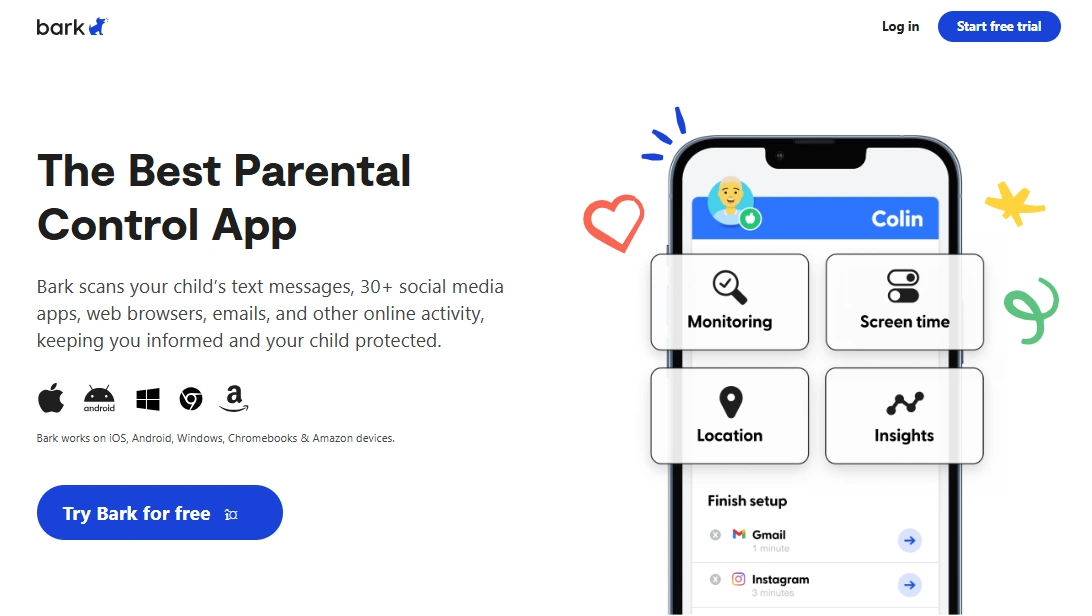
Description: Bark is a strong tablet option if your goal is safety alerts (high-signal warnings) rather than micromanaging every click. On tablets—especially shared or home devices—this can reduce “control fatigue” while still catching meaningful risks.
Product Highlights
- Safety-first monitoring philosophy (signals vs constant policing)
- Works well alongside time schedules and content rules
- Good fit when you want fewer but more meaningful alerts
What’s to like: Great when you want a tablet to be “safe by default” without turning it into a daily argument machine.
What’s not to like: Any safety system needs a simple plan: what happens after an alert, who reviews it, and what boundaries are kept.
PROS
- Safety-oriented approach (good fit for tablets at home)
- Helps reduce noise vs “read everything” monitoring
- Pairs well with a privacy-respecting family agreement
CONS
- Not designed as a school fleet management platform
- Best results require clear family rules and transparency
Ready to try Bark? Check the latest plans on the official website.
Parentaler (best “simple controls” pick)
Description: Parentaler is a practical choice when you want clear, enforceable rules on a tablet—especially in families where consistency matters more than advanced features.
Product Highlights
- Good baseline restrictions for everyday tablet use
- Useful for shared family tablets when rules are simple
- Works best when combined with built-in iPad/Android controls
What’s to like: Easier to explain, easier to maintain, and usually less stressful than “deep monitoring” setups.
What’s not to like: If you need complex school-style management, you’ll want education-focused tooling instead.
PROS
- Simple for parents to manage day-to-day
- Good baseline for shared devices
- Supports “rules first” parenting approach
CONS
- May feel “lightweight” for advanced scenarios
- Still requires a clear boundary agreement with kids
Ready to try Parentaler? Check the latest plans on the official website.
Eyezy (best for busy parents)
Description: Eyezy is often a good match for families who want practical visibility and controls without turning setup into a weekend-long project. It’s especially helpful when tablets are used heavily after school.
Product Highlights
- Parent-friendly monitoring options (depending on device setup)
- Works well with routine-based rules (school nights, homework blocks)
- Good fit for parents who want “usable, not perfect” controls
What’s to like: Supports consistent routines—often the real difference between “tablet works” and “tablet wars.”
What’s not to like: If used secretly, any monitoring tool can damage trust. Use it as part of an agreement.
PROS
- Practical for everyday parenting
- Useful for keeping tablet habits predictable
- Pairs well with screen time schedules
CONS
- Feature depth varies by platform/device
- Needs clear “what we track and why” boundaries
Ready to try Eyezy? Check the latest plans on the official website.
mSpy (best all-round monitoring toolkit)
Description: mSpy is a broad toolkit that can help in higher-concern situations—especially when a tablet is effectively a child’s “main device” for messaging, social apps, and browsing.
Product Highlights
- Wide feature coverage (visibility across many areas)
- Helpful for parents dealing with repeated rule-breaking
- Pairs best with strong baseline restrictions and transparency
What’s to like: Strong for families who need an all-round option (and are willing to set clear rules about boundaries).
What’s not to like: Overuse creates constant conflict. Start with guardrails first, then add monitoring only if needed.
PROS
- Broad toolkit for parent-managed devices
- Useful when a tablet replaces a phone
- Works best as part of a clear family plan
CONS
- Can be “too much” for low-risk families
- Trust issues if used without agreement
Ready to try mSpy? Check the latest plans on the official website.
uMobix (best for app usage clarity)

Description: uMobix is a strong option when the big question is: “What is this tablet actually being used for?” It’s especially useful when kids switch apps quickly and parents need clarity before deciding what to restrict.
Product Highlights
- Helps reveal real usage patterns
- Supports routine-based controls
- Good complement to built-in screen time features
What’s to like: Clarity reduces guessing—and guessing is where most parents over-restrict.
What’s not to like: If your main need is just bedtime schedules and app limits, built-in controls plus a simpler app may be enough.
PROS
- Great for understanding tablet habits
- Useful for tightening rules based on evidence
- Pairs well with “screen time first” setups
CONS
- Feature depth varies by platform/device
- Works best with transparent family rules
Ready to try uMobix? Check the latest plans on the official website.
Want tablet rules that run automatically? Use these next: Best Screen Time Apps for iPhone and Best Screen Time Apps for Android.
Tablet setup playbook (works for iPad + Android)
1) Decide: single-kid tablet vs shared family tablet
- Single-kid tablet: strongest results (one profile, consistent rules).
- Shared family tablet: you must define who can install apps, and when the tablet is “free time.”
If it’s shared, start here: Shared Family Tablets Guide.
2) Lock down installs first (this fixes 80% of problems)
- Require approval for installs and purchases.
- Turn off “install from unknown sources” on Android (if available on your device).
- Disable auto-install surprises and keep your PIN private.
3) Add schedules before you add monitoring
Schedules reduce arguments. Use time rules like “homework block,” “bedtime lock,” and “weekend extra time.”
Practical guide: How to Limit Screen Time Automatically.
4) Choose a “minimal monitoring” baseline
- Start with web filtering + app limits.
- If risks are higher, add safety alerts (not constant reading).
- Keep a clear boundary: what you monitor and what you don’t.
Use this as your “privacy guardrail”: Monitor Without Invading Privacy.
5) When a tablet is also a school device
School tablets should follow school policy first. If you’re dealing with a school-managed iPad, this is the most relevant setup guide: How to Set Up Parental Controls on School iPads.
FAQ
What is the best parental control app for iPad?
If you want a safety-first approach that avoids constant micromanagement, Bark is a strong option. If you want a simpler day-to-day tool, Parentaler is often easier to maintain. For broader monitoring coverage, mSpy is the all-round pick (best used with clear rules).
What is the best parental control app for an Android tablet?
For many families, the best results come from combining schedules and install controls with a parent-friendly app like Eyezy or a usage-clarity option like uMobix. Choose based on whether you need simple rules or deeper visibility.
How do I set up a shared family iPad for two kids?
Start by locking installs/purchases, defining schedules, and deciding how each child earns time. If possible, separate user profiles/accounts. For the most practical approach, see: Shared Family Tablets Guide.
Should I monitor messages and social apps on a tablet?
Only if there’s a clear reason and it’s part of a transparent family agreement. In low-risk families, content filters + time schedules are often enough. For privacy-first guidance: read this guide.
Can I use these apps on school tablets?
School-managed devices should follow school policy and education-focused setups. Start here: Best Parental Control Apps for School iPads and Tablets.
Do I need a separate tablet just for schoolwork?
Not always—but it’s often the cleanest solution for older kids. If you can’t separate devices, use strict schedules and block distractions during homework windows.