

If you’re a non-techy parent, “website blocking” should be simple: pick a few categories (adult, gambling, harmful content), maybe add a couple URLs, and move on with your life.
That’s exactly the lane Parentaler aims for: simple web filtering with minimal setup and minimal “settings fatigue.” The trade-off is predictable: it’s not the strictest lock-down tool, and it’s not built as a heavy “alert ecosystem” either.
If you’re still choosing between tools, start with: best website blocking apps for Android and iPhone.
Short on time? Quick verdict
- Parentaler is best for: non-techy parents who want basic web filters without a complicated dashboard.
- Works best when: your kid isn’t actively trying to bypass rules with VPN/DNS/new browsers.
- If you need strict “blocked means blocked” enforcement: Eyezy usually wins.
- If you want a long-term family safety system (filter + routines + monitoring/alerts): Bark is often the easiest to live with.
Quick jump: 60-sec checklist · Verdict · Comparison table · What really matters · Best for your situation · Setup tips · Reviews · Legal notes · FAQ
60-second decision checklist
- Do you want “simple filters” or “strict enforcement”? Simple: Parentaler. Strict: Eyezy.
- Start with categories (adult, gambling, harmful) before long URL lists.
- Android or iPhone? Expect Android to be easier for stronger controls; iPhone can be more setup-dependent.
- Bypass reality: VPN + private/secure DNS + new browsers are the usual loopholes.
- Make it livable: combine filters with downtime routines (night + homework window).
Verdict: is Parentaler good for website blocking?
Yes—if your goal is basic web filtering with minimal setup, Parentaler is a solid choice. It’s designed for parents who want a simple “set rules and move on” experience.
No—if your child constantly bypasses rules (VPN, DNS tricks, extra browsers). In that case, you’ll typically do better with a stricter tool like Eyezy’s web filter.
If your priority is a calmer long-term family system (filter + routines + monitoring/alerts), see: Bark web filtering & content monitoring review.
Comparison table: Parentaler vs popular website blocking alternatives
Here’s the real-life breakdown: strictness, maintenance, and how well the setup holds up when kids start testing boundaries.
| App | Best on | Blocking style | Bypass resistance | Best for |
|---|---|---|---|---|
| Parentaler | Android + iPhone (separate setups) | Simple category-style filters + basic rules | Low-to-mid | Non-techy parents who want “simple” |
| Eyezy Website Blocker | Android (stronger), iPhone (varies) | Categories + URL filters (enforcement-first) | High | Techy kids / strict rules |
| Bark | Android + iPhone | Family rules + filtering + routines + alerts | Good (best with routines) | Best long-term “low drama” system |
| mSpy Porn Blocker | Android + iPhone | Adult-content exposure reduction | Mid | One specific goal (adult-site risk) |
| uMobix | Android (stronger), iPhone (varies) | Parent dashboard + controls workflow | Mid | Parents who want patterns + rules |
What really matters (simple filters, Android vs iPhone, bypass reality)
1) Category blocking beats long URL lists
For non-techy parents, category blocking is the only approach that stays manageable. You’ll get better results by blocking adult, gambling, and harmful content than by maintaining a long manual blacklist.
For a broader comparison across tools, see: best website blocking apps.
2) “Simple” is a feature (until bypassing becomes the real problem)
Parentaler’s biggest strength is simplicity. The most common reason parents outgrow simple filters is not “missing features”—it’s that a kid starts using loopholes.
Typical bypass methods:
- Installing a new browser
- Using a VPN
- Enabling private/secure DNS
- Opening links inside apps (in-app browsers)
If bypassing is already happening, you’ll usually want a stricter tool like Eyezy. Read: Eyezy web filter review.
3) Android vs iPhone expectations
Android is typically easier when you want stronger control-style setups. On iPhone, filtering depth can be more setup/method dependent—so it’s smart to test your must-have rules early.
If you’re setting up iPhone monitoring safely, use: how to set up an iPhone monitoring app safely and legally.
4) Filters work best when paired with routines
Web filtering reduces exposure, but routines reduce conflict. The simplest routine that works for most families:
- Night downtime (internet off after bedtime)
- Homework window (school allowed, distractions restricted)
Related reads: best screen time control apps · Parentaler screen time review
Best for your situation
- I’m non-techy and just want basic web filters: Parentaler
- My kid bypasses rules (VPN/DNS/new browsers): Eyezy Website Blocker
- I want the easiest long-term family safety system: Bark
- I mainly want to reduce adult-site exposure: mSpy Porn Blocker
- I want a parent dashboard to spot patterns and adjust rules: uMobix
Setup tips (make Parentaler web filtering actually work)
Tip 1: Start with 3 categories only
Don’t overcomplicate it. Start with adult + gambling + harmful content. Add more categories only if a real issue appears.
Tip 2: Keep essentials always allowed
Rules stick better when kids can still function: calls, navigation, school portals, and family messaging.
Tip 3: Do a 48-hour bypass test
- Install a second browser
- Try enabling a VPN
- Check private/secure DNS settings
- Open links inside social apps (in-app browser test)
If bypassing is easy, consider switching to a stricter blocker (Eyezy) or using a family-system approach (Bark).
Tip 4: Pair with screen-time routines
Filtering alone won’t stop late-night scrolling. Add downtime schedules. Start here: screen time control apps for kids’ phones.
Reviews
Parentaler (simple website blocking for non-techy parents)
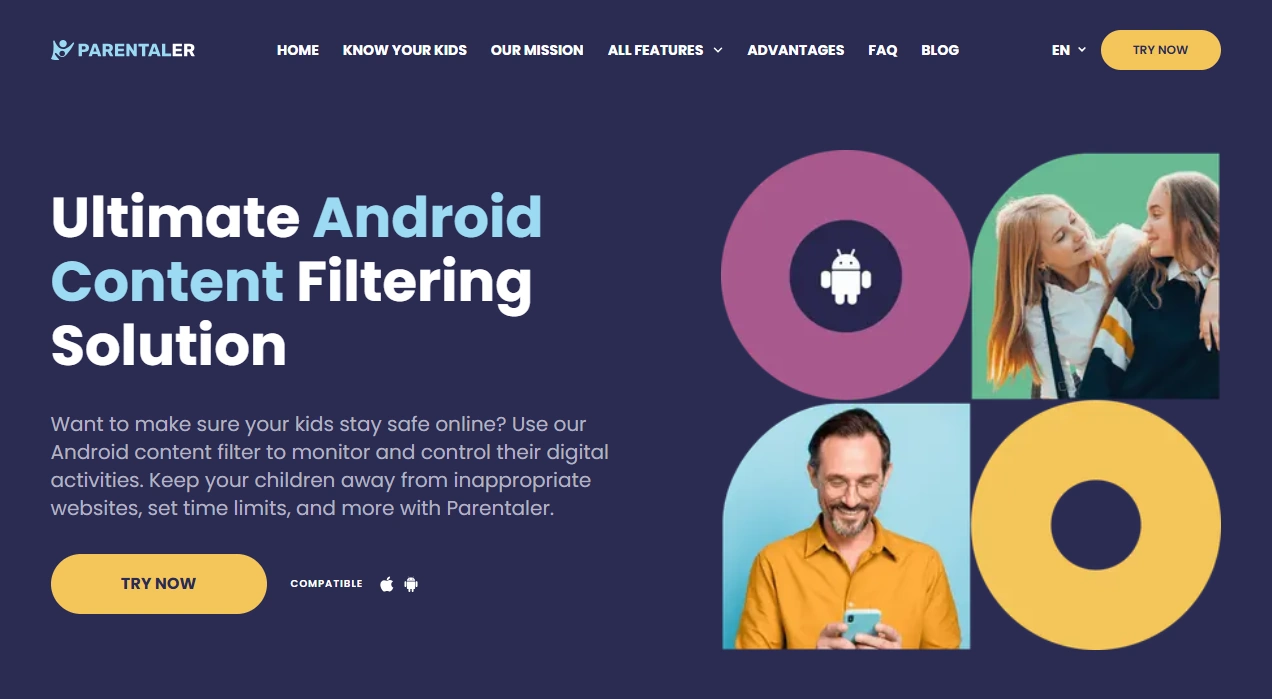
Android: Parentaler Web Filtering Android
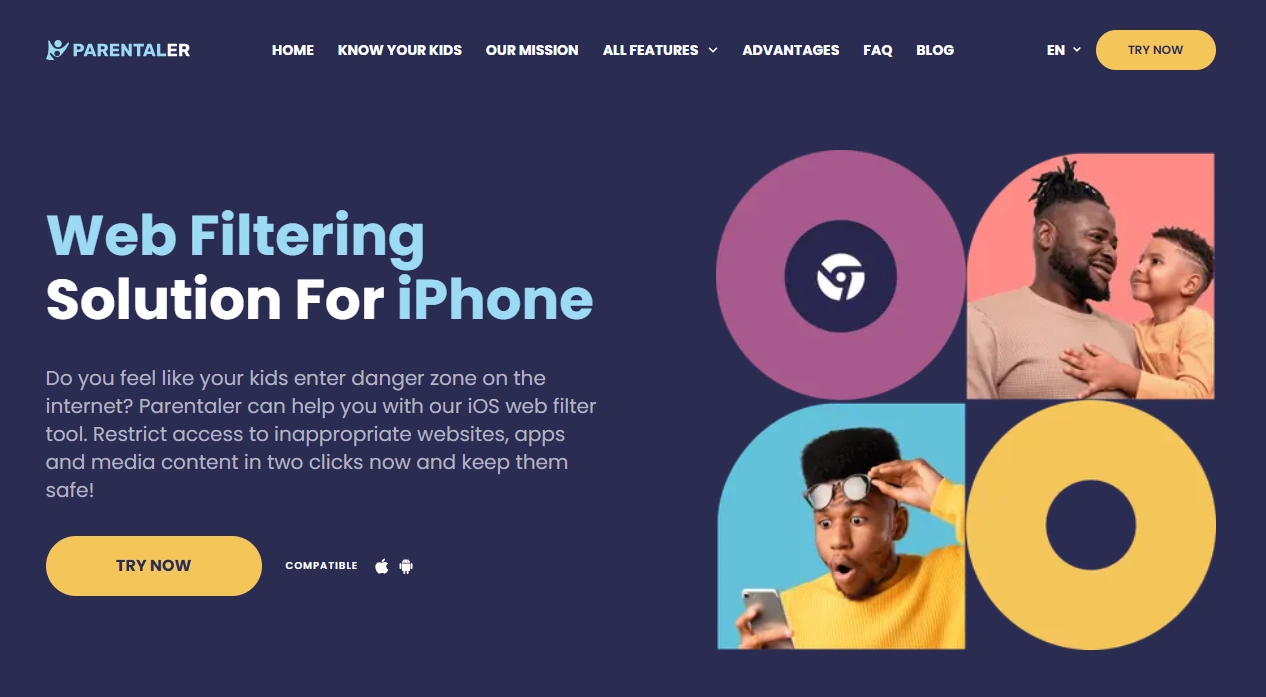
iPhone: Parentaler Web Filtering iPhone
Description
Parentaler is a good fit if you want a simple filtering layer without feeling like you need to become an IT admin. It’s designed for parents who want to block obvious bad content and keep day-to-day maintenance minimal.
Product highlights
- Simple web filtering (easy to start)
- Separate setups for Android and iPhone
- Best results when paired with routines (downtime/homework window)
What’s to like
- Low settings fatigue (non-techy friendly)
- Good “starter” web filtering layer
- Pairs nicely with simple screen-time rules
What’s not to like
- Not the strictest option if your kid actively bypasses rules
- Like all filters, it can be weakened by VPN/private DNS/new browsers if device rules are loose
PROS
- Simple to set up and maintain
- Great for non-techy parents
CONS
- Lower bypass resistance than strict blockers
Get Parentaler: Android · iPhone · Official page
Bark (best long-term family system)
Description
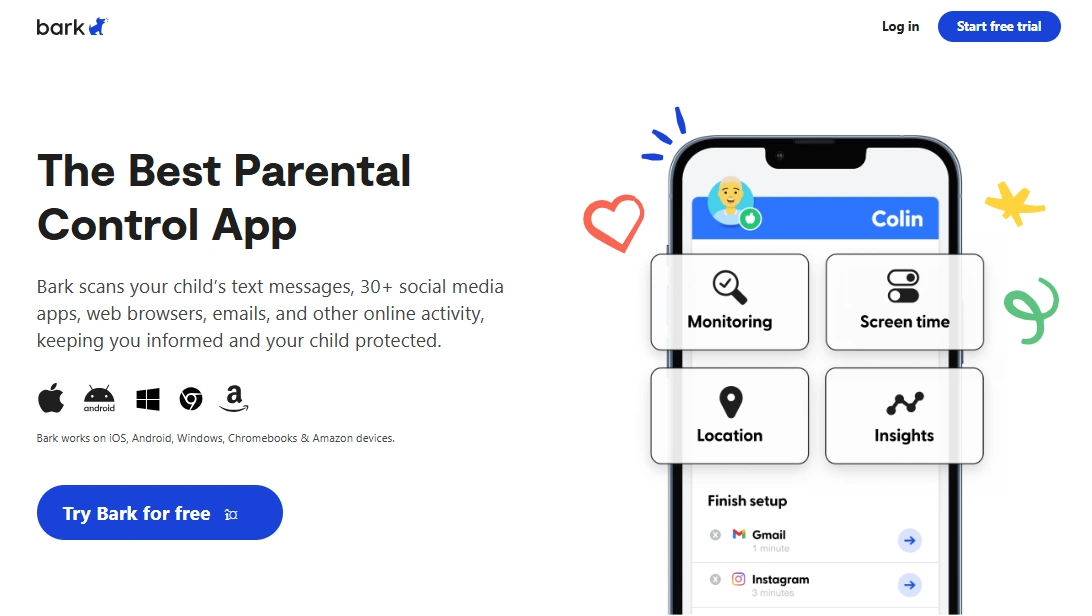
Bark is often the easiest tool to live with long-term because it blends web filtering with routines and a safety/monitoring approach that’s designed for real families (not constant surveillance).
Product highlights
- Family rules + web filtering + schedules
- Designed to reduce daily conflict
- Strong “set it and manage weekly” workflow
What’s to like
- Best overall family system for most households
- Less “settings fatigue” than strict enforcement tools
What’s not to like
- If you need strict lock-down enforcement, Eyezy can feel stronger
PROS
- Best long-term usability
- Great balance of safety + routines
CONS
- Not always the strictest “no loopholes” blocker
Try Bark: Get Bark · Read the full Bark web filtering review
Eyezy Website Blocker (strict enforcement alternative)
Description
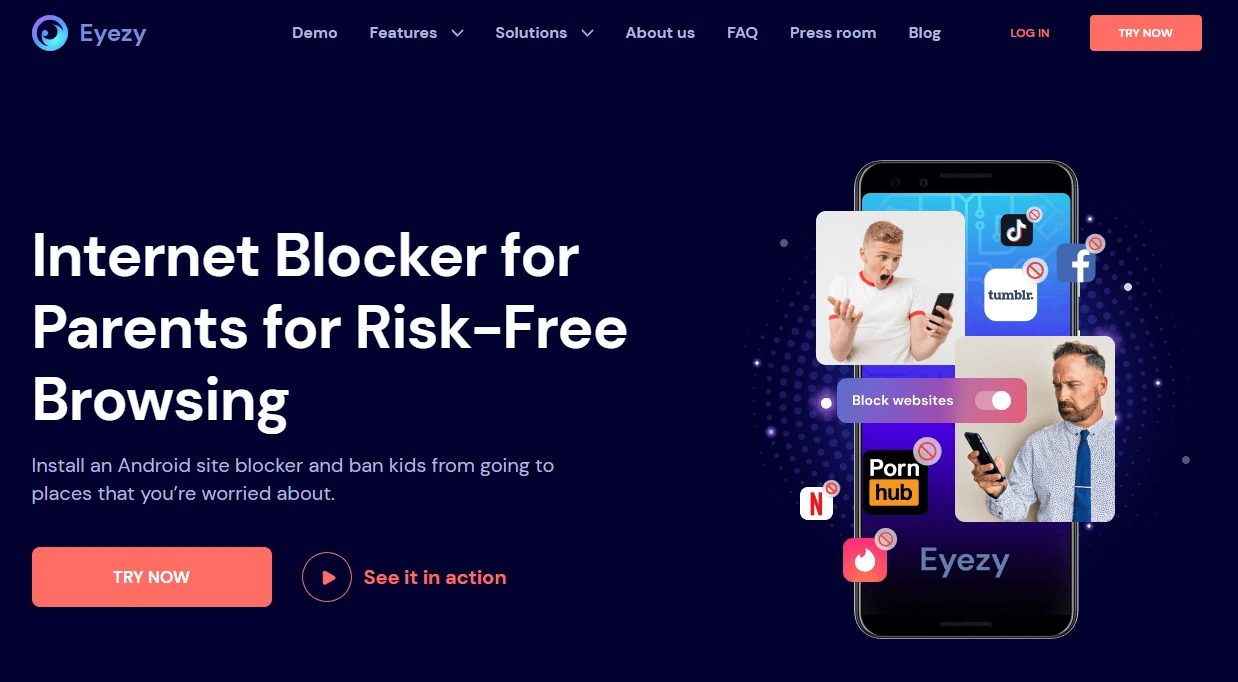
If your kid is actively hunting for loopholes, Eyezy is usually the better pick than “simple filters.” It’s designed to behave more like strict enforcement: blocked means blocked.
Product highlights
- Enforcement-first web filtering
- Categories + URL filters
- Better fit for bypass-prone kids
What’s to like
- Stronger strict blocking feel than basic filters
- Great when you need tighter control
What’s not to like
- More settings/complexity than Parentaler
PROS
- Best strict alternative
- Higher bypass resistance
CONS
- Heavier than a simple “set and forget” filter
Try Eyezy: Website Blocker · Read the Eyezy web filter review
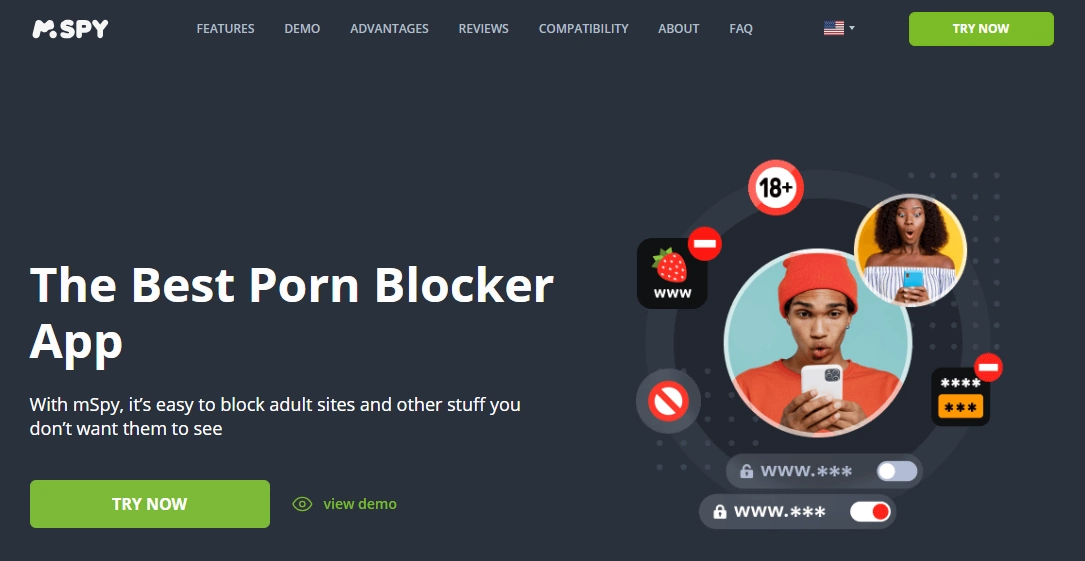
mSpy Porn Blocker (focused adult-site protection)
Description
If your main concern is adult-site exposure (not every category under the sun), mSpy’s Porn Blocker can work as a focused extra layer—especially combined with downtime schedules.
Product highlights
- Adult-content exposure reduction focus
- Useful add-on layer for a common parent worry
What’s to like
- Clear use-case
- Simple way to tighten one high-risk area
What’s not to like
- Not a full category blocker for every type of content
PROS
- Strong adult-content focus
CONS
- Not an all-in-one family system
Try mSpy Porn Blocker: Get it here · Read the mSpy web blocking review
uMobix (parent dashboard + web filtering layer)

Description
uMobix is a better fit when you want a parent dashboard to spot patterns and then tighten rules. It can pair well with web filtering, but it’s not the simplest “set it and forget it” option.
Product highlights
- Dashboard-style monitoring workflow
- Web filtering layer (setup-dependent)
- Best paired with routines and weekly review
What’s to like
- Great for parents who want more visibility
- Useful for “patterns → rules” parenting
What’s not to like
- More complex than Parentaler’s simple filters
PROS
- Good for visibility + adjusting rules
CONS
- Not as simple as Parentaler
Try uMobix: Get uMobix · Read the uMobix web blocking review
Legal notes
Use website blocking and parental control tools only on devices you own, devices you manage (for example, your child’s phone under your care), or where you have clear consent. Monitoring or controlling someone else’s device without permission can be illegal.
Practical overview: legal phone tracking: what’s allowed and what’s not.
FAQ
Is Parentaler good for non-techy parents?
Yes. Parentaler is designed to be simple: basic web filtering rules without complex dashboards. It’s a strong fit if you want a “set rules and move on” approach.
Does Parentaler block websites by categories or URL?
It’s best used as a category-style filtering tool with minimal maintenance. Use URL blocking only for a short list of repeat-offender sites if needed.
Is Parentaler better on Android or iPhone?
Android typically makes stronger control-style setups easier. On iPhone, filtering behavior can be more setup/method dependent, so test your must-have rules early.
How do kids bypass website blocking?
The most common bypass methods are VPN apps, private/secure DNS settings, installing a new browser, and using in-app browsers. A quick “48-hour bypass test” helps you spot obvious loopholes.
What’s the best alternative if my child bypasses Parentaler?
If strict enforcement is your priority, Eyezy Website Blocker is usually the stronger choice. If you want a calmer long-term family system, Bark is often the best overall option.
Is it legal to use Parentaler on my child’s phone?
Laws vary by country, but parents commonly manage a minor child’s device they own or administer. Using these tools on other adults or devices you don’t control without consent can be illegal.