

Not every parent wants a “feature monster” parental control suite. Sometimes you just want simple screen time limits you can set up in one sitting—and then forget about until it matters.
Parentaler is built for that kind of parent: lower complexity, fewer settings, and a practical approach to boundaries. In this review, we’ll cover what Parentaler can realistically do for screen time control, where it’s weaker, and when you should choose a more full-featured option instead.
If you’re still deciding which type of app you need, start here: best screen time control apps for kids’ phones.
Short on time? Quick verdict
- Best for: non-techy parents who want simple limits (reduce distractions, keep routines) without a complex dashboard.
- Not ideal for: strict enforcement families or techy kids who constantly try to bypass rules (Eyezy or Bark usually fits better).
- Android vs iPhone: Android is usually more flexible for control-style setups; iPhone results can vary by method and device rules.
- Best alternative: Bark for the best overall family system; Eyezy for stricter schedules/controls.
Quick jump: 60-sec checklist · Verdict · Comparison table · What really matters · Best for your situation · Setup tips · Reviews · Legal notes · FAQ
60-second decision checklist
- Do you want “simple” or “strict”? If you want minimal setup and basic limits, Parentaler fits. If you want strict enforcement, choose Eyezy/Bark.
- Pick your 2 rules: night downtime + homework window. Don’t overbuild on day one.
- Always-allowed essentials: calls, navigation, school apps, family messaging.
- Test bypass basics: restart the phone, turn on battery saver, install a new distracting app.
- Weekly review beats daily arguing: adjust limits once a week, not every night.
Verdict: is Parentaler good for screen time control?
Parentaler is a good choice if you want screen time rules that are easy to understand and easy to maintain—especially if you’re not interested in learning a big parental-control ecosystem.
Parentaler is not the best choice if your situation requires strict app-by-app schedules, advanced controls, or strong resistance against a techy kid actively trying to bypass rules. In those cases, consider Eyezy for stricter routines or Bark for a more balanced family system.
Try Parentaler · Compare the best screen time apps
Comparison table: Parentaler vs top alternatives
This comparison focuses on real parenting outcomes: how strict the controls feel, how easy it is to manage daily, and what happens when kids push back.
| App | Best on | Setup effort | Schedules/limits | Strictness | Best for |
|---|---|---|---|---|---|
| Parentaler | Android + iPhone (varies) | Low | Basic-to-mid | Moderate | Non-techy parents, simple boundaries |
| Bark | Android + iPhone | Low-to-mid | Strong | Balanced | Best overall family system |
| Eyezy | Android (most complete), iPhone (varies) | Mid | Very strong | High | Strict routines & enforcement |
| uMobix | Android (practical), iPhone (varies) | Low-to-mid | Good | Moderate | Busy parents who want quick checks |
| mSpy | Android + iPhone (varies) | Mid | Monitoring-first | Low-to-mid | Visibility + coaching (less strict blocking) |
What really matters with “simple limits”
1) Schedules beat daily minutes (less arguing)
If you only set a daily limit, you’ll negotiate it every day. The simplest system that works:
- Night downtime: reduce late-night scrolling
- Homework window: allow school apps, restrict distractions
If you want a clean blueprint you can copy, see: how to limit screen time on kids’ phones automatically.
2) Keep “always allowed” essentials
Families stick with rules when kids can still function. Keep these available:
- Calls (and emergency contacts)
- Navigation
- School apps
- Family messaging
3) Android vs iPhone affects reliability expectations
- Android: usually more flexible for control-style setups, but battery/power saving settings can break enforcement if not configured.
- iPhone: features can be more method/device dependent—set expectations and validate early.
Platform shortlists: best screen time apps for Android · best screen time apps for iPhone
4) Simple tools work best when your parenting is consistent
Parentaler is a “simple limits” tool. That means your consistency matters more than extra features. The calm, predictable approach wins:
- Rules don’t change daily
- Weekly review day instead of nightly arguments
- Freedom is earned through consistency
Best for your situation
- I’m not techy and want simple screen time boundaries: Parentaler
- I want the best overall family system (controls + safety): Bark
- My kid is techy / pushes hard; I need strict enforcement: Eyezy
- I’m busy and want fast “dashboard checks”: uMobix
- I want visibility and calm coaching more than blocking: mSpy
If you’re planning a hybrid approach, see: how to use Eyezy and Parentaler together for screen time and app limits.
Setup tips (so Parentaler stays simple and effective)
Tip 1: Start with one schedule
Set night downtime first. Don’t create 20 rules on day one. If the kid adapts well, add the homework window next.
Tip 2: Test the “real life” breakpoints
- Restart the phone (do limits still apply?)
- Enable battery saver / power saving mode (does enforcement degrade?)
- Switch between Wi-Fi and mobile data (does reporting/updates make sense?)
- Try installing a new distracting app (do you notice quickly?)
Tip 3: Use a weekly review rhythm
Instead of daily arguments, pick one day per week to adjust limits. This makes boundaries predictable and reduces “wear and tear” on you.
Tip 4: Keep rules fair and explainable
Kids accept rules faster when they feel logical: sleep, school, health, and family time. When the rule is “because I said so,” they hunt for bypasses.
Reviews
Parentaler (simple screen time limits for non-techy parents)
Description
Parentaler is designed for parents who want simple boundaries without a steep learning curve. It’s most useful when your goal is to reduce distractions and build routines (sleep, homework, family time), not to run a complex control ecosystem.
Product highlights
- Simple screen time control mindset (low complexity)
- Practical limits and routines when configured properly
- Good starter option for families who dislike complicated dashboards
What’s to like
- Low friction: easier to set up and maintain
- Good fit for younger kids and early habit-building
- Works well when you keep rules minimal and consistent
What’s not to like
- Not the strictest or most advanced tool for complex enforcement
- Can be weaker against techy kids who actively test loopholes
- Android vs iPhone expectations can differ—validate early
PROS
- Best “simple limits” pick for non-techy parents
- Lower settings fatigue than suite-style apps
CONS
- Not ideal for strict enforcement situations
- Less advanced scheduling/controls than Eyezy/Bark
Try Parentaler: Official page
Bark (best overall family system)
Description
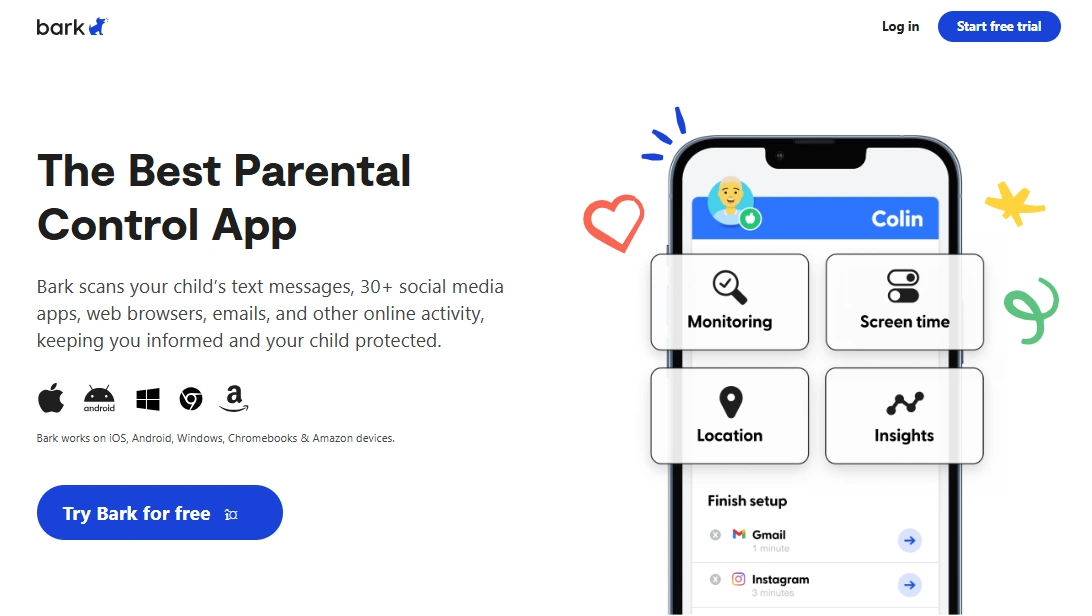
Bark is the better option when you want a broader family system: strong routines plus safety features that help reduce risky content and parental stress. It’s often the best “long-term” pick for most families.
Product highlights
- Strong family-friendly screen time routines
- Better overall system for most households
- Good balance between control and usability
What’s to like
- Best overall for most families
- More “stick with it” long-term than strict lock-down tools
What’s not to like
- Not always the strictest “power user” enforcement suite
PROS
- Best overall alternative
- Great family-first routine approach
CONS
- May feel less strict than Eyezy for high-conflict cases
Try Bark: Official page
Eyezy (stricter schedules and enforcement)
Description
Eyezy is the better choice when you need stronger, stricter boundaries: more control levers, tighter schedules, and a suite-style system for families where “simple limits” aren’t enough.
Product highlights
- Very strong scheduling/rule controls
- Suite-style parental control toolbox
- Great for strict school-night routines
What’s to like
- Stricter enforcement than simple tools
- Better fit for older kids who push boundaries hard
What’s not to like
- More complexity than Parentaler
- Android tends to be most complete; iPhone outcomes may vary
PROS
- Best strict alternative
- Strong routines + controls
CONS
- More settings fatigue
Try Eyezy: Official page
uMobix (busy-parent workflow, quick checks)

Description
uMobix fits parents who want a faster “dashboard” feel and guided onboarding. If Parentaler feels too basic and Eyezy feels too heavy, uMobix can be a middle option for practical routines.
Product highlights
- Guided parental control onboarding
- Practical routine-friendly approach
- Good for quick parent checks
What’s to like
- Lower friction than strict suites
- Good middle ground for many families
What’s not to like
- Not as strict as Eyezy in enforcement-heavy cases
- Validate iPhone expectations early
PROS
- Good “middle ground” option
- Busy-parent friendly workflow
CONS
- May still be too light for strict enforcement needs
Try uMobix: Official page
mSpy (best for visibility and coaching)
Description
mSpy is a better fit if your goal is mainly understanding behavior: usage patterns, app time, and accountability conversations—especially with teens where strict locking can backfire.
Product highlights
- Strong monitoring visibility and reports
- Useful for weekly review conversations
- Good “coach first, enforce later” workflow
What’s to like
- Great for accountability and behavior coaching
- Often less conflict than strict blocking for teens
What’s not to like
- More monitoring-first than control-first
- Not the best pick if you want strict app blocking
PROS
- Best visibility-focused alternative
- Great for teen accountability
CONS
- Not a strict screen time control suite
Try mSpy: Official page
Legal notes
Use parental control and screen time tools only on devices you own, devices you manage (for example, your child’s phone under your care), or where you have clear consent. Monitoring or controlling someone else’s device without permission can be illegal.
Practical overview: legal phone tracking: what’s allowed and what’s not.
FAQ
Is Parentaler good for screen time control?
Parentaler is a good fit if you want simple limits without a complicated dashboard. It works best when you keep rules minimal (downtime + homework window) and stay consistent.
Is Parentaler better for kids or teens?
It’s usually easier to use successfully with younger kids and early teens. For older teens who push boundaries hard, stricter tools like Eyezy or a broader system like Bark may work better.
Can kids bypass Parentaler screen time limits?
Any app can be bypassed if the setup is weak or rules change daily. Reduce bypassing by testing restarts, battery saver, and install attempts—and using predictable weekly reviews instead of nightly negotiations.
Does Parentaler work on Android and iPhone?
Parentaler is available for both, but the “control completeness” can differ by platform and setup method. Android is usually more flexible for control-style rules, while iPhone capabilities can be more method/device dependent.
What’s the best alternative to Parentaler?
If you want the best overall family system, Bark is a strong pick. If you need stricter schedules and enforcement, Eyezy is often better.
Should I use strict blocking or lighter routines?
Most families succeed faster with routines (downtime + homework window) than constant strict blocking. Start lighter, then tighten only if behavior doesn’t improve.