

“Business use” changes everything when comparing FlexiSPY vs Spyera.
In a company setting, the winner isn’t the app with the longest feature list — it’s the option that fits a policy-first monitoring program: clear notice, minimal collection, restricted access, short retention, and incident-based escalation.
Quick shortlist: If you need a “pro / advanced” option and you’re ready to govern it tightly, start with FlexiSPY. If you want a strong alternative to compare for fit/pricing under the same strict rules, shortlist Spyera.
Quick jump: Decision checklist · Verdict · Business reality (what you should monitor) · Policy & rollout · Comparison table · Reviews · FAQ
Related internal guides: Prevent Employee Data Leaks With Monitoring Software · How to Monitor Work Phones Ethically · Company Phones vs Personal Phones (Legal Guide) · Monitor Freelancers & Contractors Legally · Best Employee Monitoring Apps (Legal & Ethical)
If you’re here for the general matchup first: FlexiSPY vs Spyera — The Battle of Pro Monitoring Apps.
FlexiSPY vs Spyera for business — 60-second decision checklist
- Device ownership: Are you monitoring company-owned phones (best) or BYOD (higher risk)? See: company vs personal devices.
- Your purpose: Is it data protection / compliance / incident response (good) or “watching productivity” (high risk)?
- Start minimal: baseline monitoring should be security posture + prohibited apps + policy violations — not private content.
- Incident-only deep dives: if you ever review deeper data, it should be approvals-based, time-limited, and logged.
- Governance: do you have written notice, role-based access, and short retention? If not, start here: ethical monitoring framework.
- Pick your tool: choose the option that best fits your governance maturity: FlexiSPY (advanced) vs Spyera (comparison alternative).
Verdict: which one is better for business use?
Pick FlexiSPY for business if…
- You have a real security reason (leak prevention, regulated data, incident response).
- You can run strict governance: written notice, restricted access, access logs, and short retention.
- You want “advanced capability” but you’ll keep the most intrusive parts exception-only.
Pick Spyera for business if…
- You want an alternative to compare for fit/pricing under the same policy-first rules.
- Your program is narrower (specific roles, specific risks, incident workflows).
- You’re prioritising a “tight scope” rollout rather than maximum capability.
My practical recommendation: If you’re building a serious monitoring program with governance, FlexiSPY is usually the better “pro” pick. If you want a strong alternative shortlist option to compare under tight scope, choose Spyera.
Business reality: what you should monitor (and what you should avoid)
Most workplace “monitoring” should be security monitoring — focused on reducing leak risk — not reading private conversations.
Recommended baseline monitoring (low-risk, high ROI)
- Device compliance posture: basic security settings, OS update status, signs of risky configurations (company-owned devices).
- Installed apps inventory: prohibited apps, unknown sideloaded tools, risky file-sharing apps.
- Policy violations: disabling protections, repeated risky behavior patterns.
- Incident triggers: lost device, suspected compromise, unusual activity that warrants a time-limited review.
Keep “content capture” incident-only
If you ever review deeper data, do it only when you have a documented reason (leak investigation, confirmed compromise) and apply approvals, tight scope, and fast deletion.
What to avoid by default (common red flags)
- Secret monitoring without notice.
- Always-on keylogging / screenshots as a “standard setting.”
- Monitoring personal messaging apps on BYOD.
- Off-hours tracking without a documented safety requirement.
Use this as your operational baseline: Leak prevention playbook.
Policy & rollout: how to deploy monitoring without creating legal/trust risk
1) Decide BYOD vs company-issued phones
For business use, the cleanest approach is to monitor company-owned phones. BYOD increases the chance you collect personal data you can’t justify.
Use this guide to draw the line: Company phones vs personal phones.
2) Write the 2-minute monitoring notice
- Purpose (security / compliance / incident response)
- Scope (company-owned devices, work accounts)
- What is monitored (categories)
- What is not monitored (your red lines)
- Retention (short by default)
- Who can access monitoring data (roles + logging)
3) Restrict access and log access
Only security/compliance roles should access monitoring data. Require approvals for deeper reviews. Log every access.
4) Make offboarding a “no excuses” process
Many leaks happen after a contract ends. If you use contractors, combine monitoring with strict offboarding:
- Disable accounts on end date
- Revoke tokens and shared links
- Rotate credentials and API keys
If contractors are part of your model: monitoring contractors legally.
FlexiSPY vs Spyera: business comparison table
| App | Best for | Platforms | Best used when | Business fit |
|---|---|---|---|---|
| FlexiSPY | Advanced monitoring programs with governance | Android, iPhone (capabilities vary by setup) | Regulated/high-risk roles, incident response, strict approvals | Best if you can enforce minimisation + access control |
| Spyera | Comparison alternative under tight scope | Android, iPhone (capabilities vary by setup) | Narrow, documented monitoring use cases and evaluation shortlist | Best when kept policy-first and incident-based |
If you want more business-focused options beyond these two, use: Best Employee Monitoring Apps (Legal & Ethical).
Reviews
FlexiSPY — business review (policy-first lens)
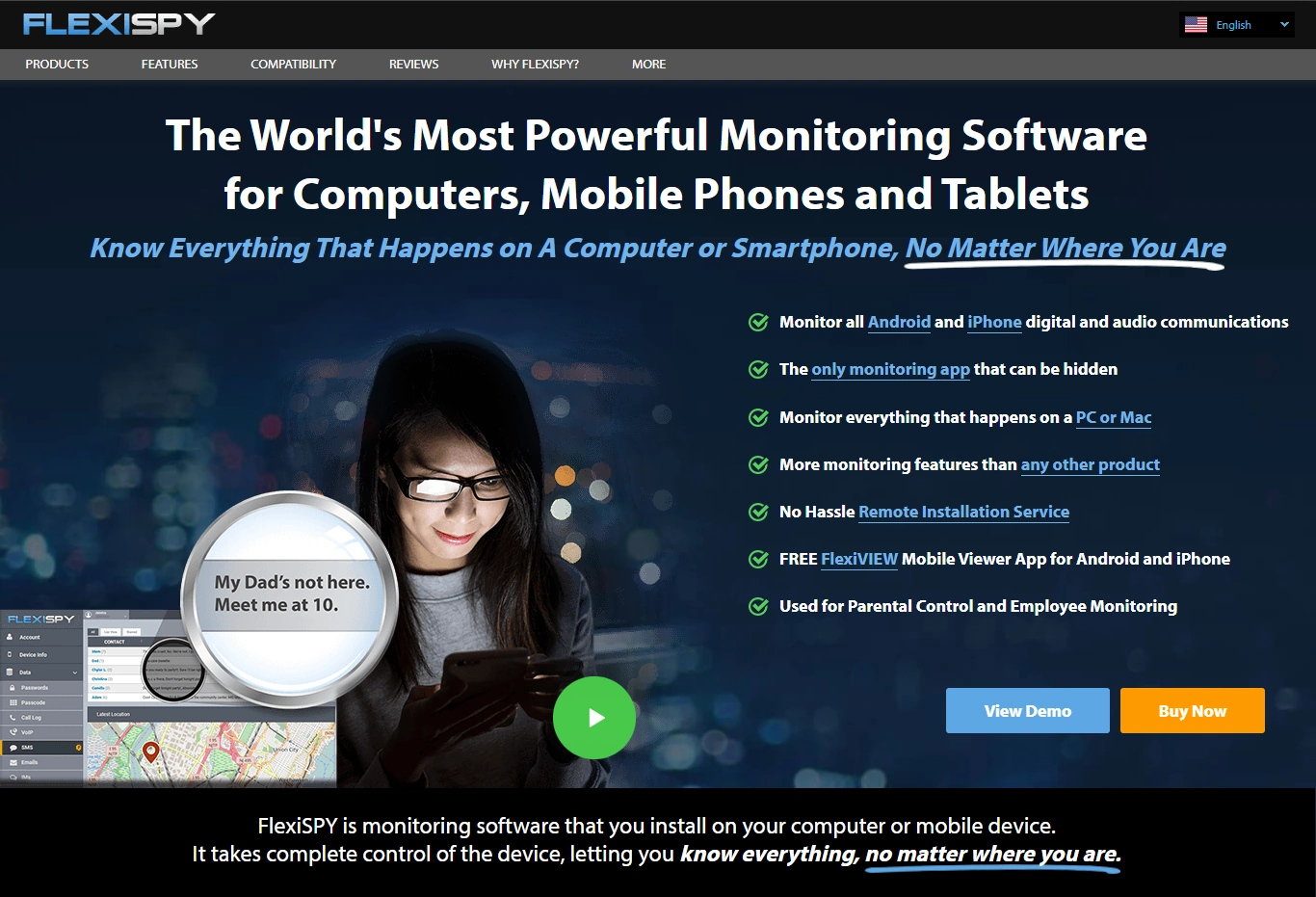
Description: FlexiSPY is positioned as a “pro / advanced” monitoring platform. In business use, it makes the most sense when you treat it as a security control for company-owned phones and run strict governance: clear notice, restricted access, and incident-only deep reviews.
Product highlights:
- Pro-level positioning for advanced monitoring needs
- Best paired with written policy + approvals + short retention
- Most defensible when used for incident workflows, not daily surveillance
What’s to like
- Fits high-risk roles where you need stronger controls
- Works well when you already have governance maturity
What’s not to like
- Higher risk of over-collection if you don’t enforce minimisation
- Can create trust issues if rolled out without transparent notice
PROS
- Strong choice for advanced, tightly governed programs
- Useful as incident-response capability
- Best fit when policy-first
CONS
- Higher governance burden
- Not ideal for broad “monitor everyone” rollouts
Related comparison: mSpy vs FlexiSPY.
Spyera — business review (tight scope lens)
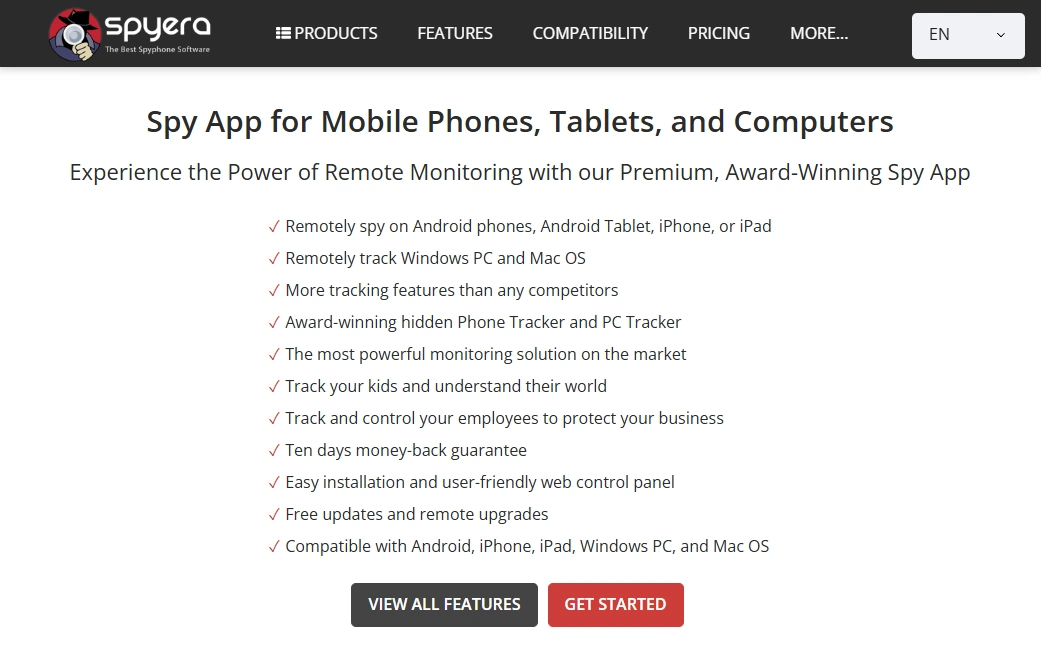
Description: Spyera works best as a pro-style alternative to compare against FlexiSPY. For business use, it’s most defensible when your monitoring scope is narrow (specific roles, specific risks), transparency is clear, and deeper access is incident-based and time-limited.
Product highlights:
- Good shortlist option for evaluating alternatives
- Best paired with clear notice and strict minimisation
- Strongest fit for narrow, documented monitoring use cases
What’s to like
- Useful “comparison candidate” when selecting a pro tool
- Works when your program is tight and well-defined
What’s not to like
- Still risky if you treat it as surveillance rather than security
- BYOD scenarios remain difficult to justify
PROS
- Solid pro-style alternative for shortlisting
- Good fit for tight scope rollouts
CONS
- Requires strict boundaries to stay defensible
- Not a replacement for strong access control + offboarding
Also compare: Spyera vs Moniterro.
FAQ
Can we use FlexiSPY or Spyera on employees legally?
Only in defensible scenarios: company-owned devices, clear written notice, a documented purpose (security/compliance), and minimal collection. Start here: How to Monitor Work Phones Ethically.
What’s the biggest mistake companies make with phone monitoring?
Trying to monitor personal devices (BYOD) too broadly, or collecting content by default. A safer baseline is security posture + prohibited apps + policy violations, with incident-only deeper reviews.
Which is better for leak prevention specifically?
Leak prevention is mostly policy + process. If you have strong governance and need advanced capability, FlexiSPY is usually the better fit. If you want an alternative shortlist option for a tight scope program, Spyera can work. Use this playbook: Prevent Employee Data Leaks.
What about contractors and freelancers?
Contractor monitoring is trickier, especially on BYOD. Prefer company-owned devices for sensitive roles and keep monitoring scope minimal. Guide: Monitor Freelancers & Contractors Legally.
Do we need a policy even for a small team?
Yes. Even a one-page “2-minute notice” that defines purpose, scope, retention, and access rules reduces risk and prevents trust damage.