

Website blockers sound simple: block adult sites, gambling, and “doom-scroll” rabbit holes. In real life, it’s trickier—because kids switch browsers, use private tabs, click links inside apps, or find a “new loophole” you didn’t know existed.
This guide compares the best website blocking apps for Android and iPhone, based on what actually matters: filtering accuracy, how hard they are to bypass, and how easy they are for parents to manage long-term.
If you want deeper brand-specific tests, you can also read: Eyezy web filter review and mSpy web blocking & site filter review.
Short on time? Quick verdict
- Best overall family choice: Bark (best “rules + safety” system; easiest to live with).
- Best for strict website blocking: Eyezy Website Blocker (stronger enforcement style).
- Best simple filters for non-techy parents: Parentaler (Android/iPhone web filtering offers below).
- Best for adult-site blocking specifically: mSpy Porn Blocker (focused use-case).
Quick jump: 60-sec checklist · Verdict · Comparison table · What really matters · Best for your situation · Setup tips · Reviews · Legal notes · FAQ
60-second decision checklist
- Pick your goal: block adult sites only, block categories (gambling/social), or build full routines (screen time + safety).
- Decide strictness: strict enforcement (Eyezy) vs balanced family rules (Bark) vs simple filters (Parentaler).
- Android vs iPhone reality: Android tends to allow stronger enforcement; iPhone can be more method-dependent.
- Expect bypass attempts: new browsers, VPNs, private DNS, and “search app” loopholes.
- Plan your response: rules + consistency beats “endless settings” for most families.
Verdict: which website blocker should you pick?
If you want the best long-term family solution: go with Bark. It’s usually the easiest to maintain without turning your home into constant tech battles.
If you need stricter website blocking and firmer enforcement: pick Eyezy Website Blocker. It’s a better fit when your kid actively pushes boundaries and “simple rules” aren’t enough.
If you want simple filters (non-techy parent, minimal setup): Parentaler’s web filtering options are a practical “set it and forget it” style choice.
If you mainly want adult-site blocking: mSpy Porn Blocker is a focused tool you can add to a broader routine system.
Comparison table: best website blocking apps
This table focuses on “real outcomes”: filtering strength, bypass resistance, and how livable it is for parents.
| App | Best on | Filtering strength | Bypass resistance | Best for |
|---|---|---|---|---|
| Bark | Android + iPhone | Strong (family safety focus) | Good (when paired with routines) | Best overall family setup |
| Eyezy Website Blocker | Android + iPhone (varies) | Very strong | High (strict style) | Techy kids / stricter enforcement |
| Parentaler Web Filtering (Android) | Android | Good (simple filters) | Mid | Non-techy parents, quick setup |
| Parentaler Web Filtering (iPhone) | iPhone | Good (simple filters) | Mid (method-dependent) | Simple iPhone filtering |
| mSpy Porn Blocker | Android + iPhone | Strong (adult-site focus) | Mid | Adult sites + risky browsing reduction |
What really matters for website blocking (Android vs iPhone, reliability, bypassing)
1) “Website blocking” is not one thing
Some tools block URLs in the browser. Others filter categories (adult, gambling). Some work at a broader level (DNS/VPN style filtering). The best choice depends on what you’re trying to stop:
- Adult content: category filters work best.
- Specific sites: URL blacklists/whitelists.
- Distraction browsing: combine filters with screen time schedules.
2) Android usually allows stricter enforcement
On Android, you can typically get closer to “rules that actually stick,” but you still need to protect against common bypass tactics (new browsers, VPNs, private DNS).
3) iPhone filtering can be more method-dependent
iPhone often requires a more “system approach”: keep it simple, test early, and use a predictable routine. If you’re also building screen time rules, see: best screen time control apps for kids’ phones.
4) Bypassing usually happens the same ways
- Installing a new browser app
- Turning on a VPN
- Using private DNS / “secure DNS” settings
- Opening links inside social apps (in-app browsers)
If you want a practical, brand-specific walk-through, use: how to block inappropriate websites on Android with Eyezy.
Best for your situation
- My kid is under 13, I want safe defaults + family rules: Bark
- My kid is techy and actively bypasses filters: Eyezy Website Blocker
- I want simple filtering without a big dashboard: Parentaler (Android) / Parentaler (iPhone)
- I mainly want to reduce adult content exposure: mSpy Porn Blocker
- I want a deeper “how it works” breakdown: Eyezy web filter review / mSpy web blocking review
Setup tips (so the filter doesn’t get bypassed in week 1)
Tip 1: Start with categories, not 200 custom URLs
Category filters (adult, gambling, harmful) cover 80% of the problem. Fine-tune specific sites later.
Tip 2: Test like a kid would
- Install a new browser (does it bypass?)
- Turn on a VPN (does it bypass?)
- Enable “secure DNS” / private DNS (does it bypass?)
- Open links inside social apps (in-app browser test)
Tip 3: Combine filtering with routines
Blocking alone doesn’t fix late-night scrolling. Pair web filtering with downtime schedules and weekly review habits. If you want the full routine blueprint, see: how to limit screen time on kids’ phones automatically.
Tip 4: Keep “always-allowed” essentials
Rules work better when kids can still function: calls, navigation, school portals, family messaging.
Reviews
Bark (best overall “family rules + safety” pick)
Description
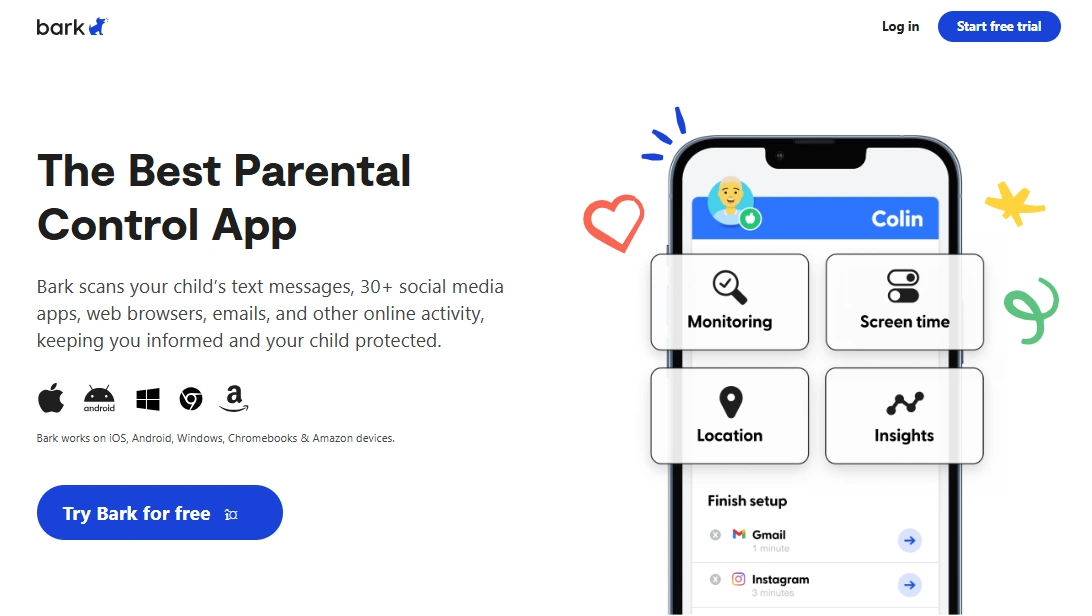
Bark is the most “livable” option for many families. Instead of acting like a punishment tool, it’s designed to support routines and safer online behavior. For website blocking, Bark works best when paired with consistent family rules (bedtime downtime + homework window).
Product highlights
- Family-first rule system (easier long-term)
- Good safety and protection mindset for kids/teens
- Works well as the “default” choice for most households
What’s to like
- Best overall family fit (less daily fighting)
- Encourages routines, not just blocking
What’s not to like
- If you want strict lock-down enforcement, Eyezy can feel stronger
PROS
- Best overall option for most families
- Strong long-term usability
CONS
- Not the strictest “power enforcement” blocker
Try Bark: Get Bark
Eyezy Website Blocker (best for strict filtering & enforcement)
Description
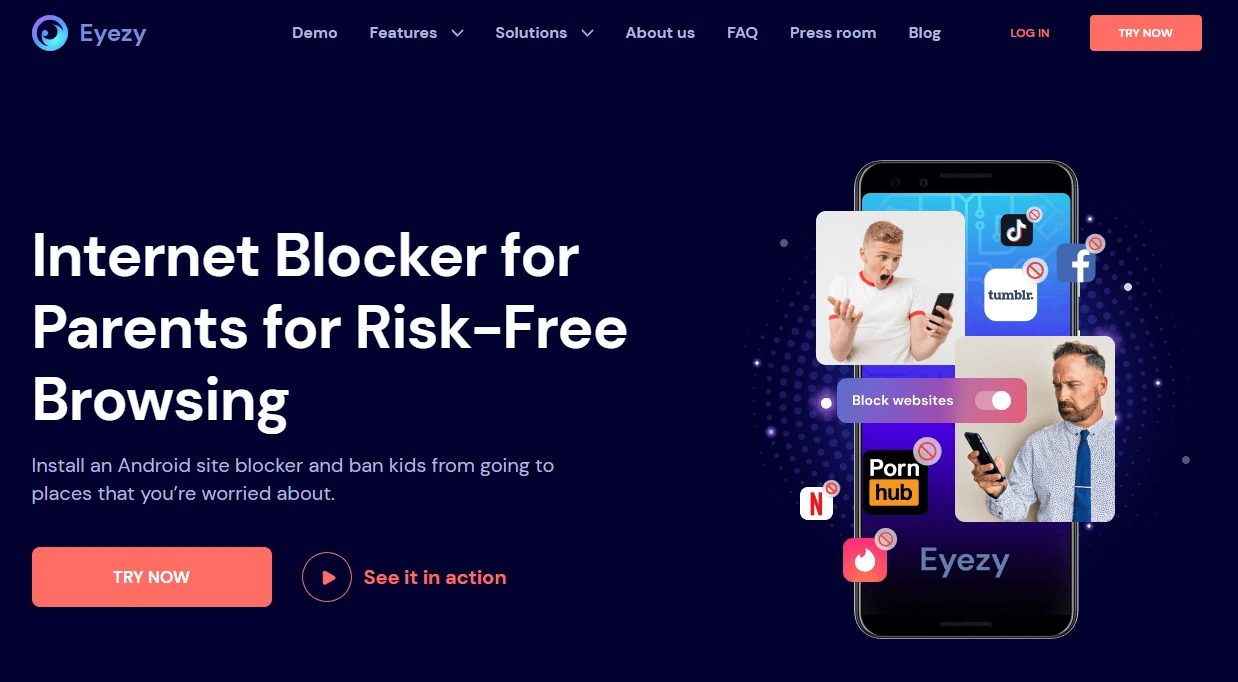
Eyezy is the best pick when you need strict website blocking—not just “gentle filtering.” It’s a better fit when your kid pushes boundaries hard and you want stronger control-style enforcement.
Product highlights
- Strong website blocking focus
- Better fit for bypass-prone situations
- Works well as the “strict option” in a comparison shortlist
What’s to like
- More enforcement-oriented than softer family tools
- Great when you need clear “blocked means blocked” behavior
What’s not to like
- Can feel heavier than “simple filters” solutions
- iPhone behavior can be more method-dependent—test early
PROS
- Best strict website blocking option
- Strong for techy kids / bypass attempts
CONS
- More of a “suite” feel than lightweight blockers
Try Eyezy: Website Blocker · Setup guide
Parentaler Web Filtering (simple filters for non-techy parents)
Android: Parentaler Web Filtering Android
iPhone: Parentaler Web Filtering iPhone
Description
Parentaler is a practical choice when you want web filtering without a complex dashboard. It’s best for families where “simple rules + simple filters” is enough—and you mainly want to reduce exposure to inappropriate websites.
Product highlights
- Simple web filtering options for Android and iPhone
- Lower settings fatigue (non-techy parent friendly)
- Good starter choice for basic website blocking
What’s to like
- Quick setup compared to suite-style tools
- Easy to maintain if your child isn’t aggressively bypassing
What’s not to like
- Not the strictest enforcement tool (Eyezy is stronger when kids fight rules)
- Bypass resistance depends on correct setup + consistency
PROS
- Best “simple filters” pick
- Good for non-techy parents
CONS
- May be too light for techy kids
Try Parentaler: Android · iPhone · Read the full review
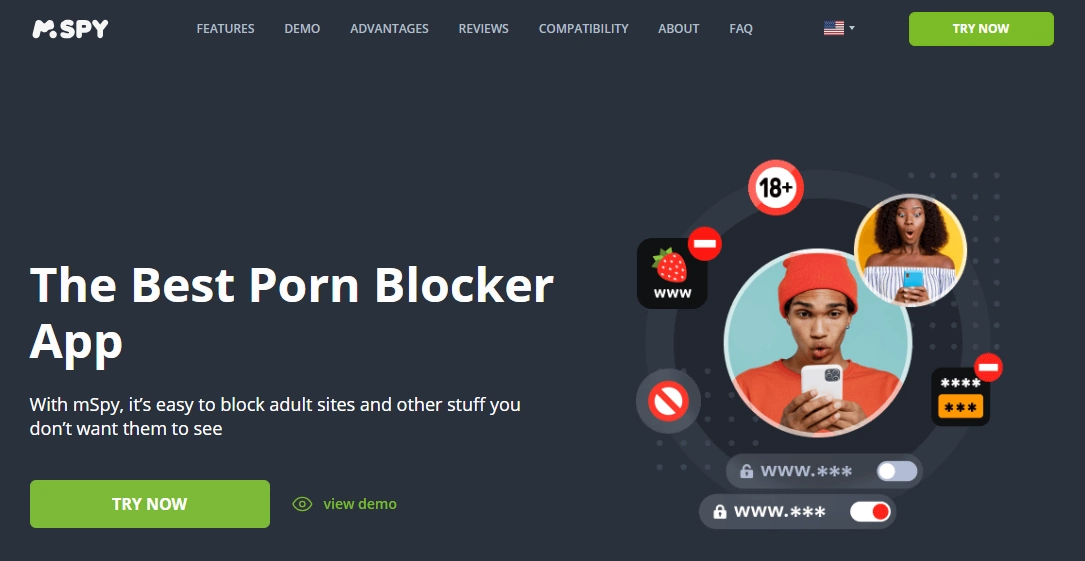
mSpy Porn Blocker (focused adult-site blocking)
Description
mSpy’s Porn Blocker is a more focused “reduce adult content exposure” option. It’s best used as part of a broader routine system (screen time schedules + conversations), not as a standalone solution for every type of website distraction.
Product highlights
- Adult-site blocking focus
- Works well as an extra layer for risky browsing reduction
- Pairs nicely with routine-based parenting
What’s to like
- Clear, focused use-case
- Good “extra layer” for families worried about exposure
What’s not to like
- Not the most complete category blocker for everything
- Still requires good routines and device rules to reduce bypassing
PROS
- Strong adult-content filtering focus
- Simple “add-on” protection layer
CONS
- Not a full “family rules” ecosystem
Try mSpy Porn Blocker: Get it here · Read the web blocking review
Legal notes
Use website blocking and parental control tools only on devices you own, devices you manage (for example, your child’s phone under your care), or where you have clear consent. Monitoring or controlling someone else’s device without permission can be illegal.
Practical overview: legal phone tracking: what’s allowed and what’s not.
FAQ
What’s the best website blocker app for kids?
For most families, Bark is the best overall choice because it combines safety with routines parents can maintain. If you need stricter enforcement, Eyezy is a stronger “strict blocker” option.
Are website blockers better on Android or iPhone?
Android is usually more flexible for strict enforcement. On iPhone, web filtering can be more method-dependent, so it’s important to test early and keep the system simple.
How do kids bypass website blockers?
The most common bypass methods are installing a new browser, using a VPN, enabling private/secure DNS, and using in-app browsers (opening links inside social apps). Testing these in the first week helps you close obvious loopholes.
Should I block websites or use screen time schedules?
For most families, the best results come from combining both: web filtering to reduce exposure and schedules (downtime/homework windows) to reduce late-night scrolling and distraction habits.
Can I block adult websites only?
Yes. If your goal is mainly adult-site exposure reduction, a focused option like mSpy Porn Blocker can work well—especially when paired with consistent device rules and routines.
Is it legal to use a website blocking app on my child’s phone?
Rules vary by country, but parents commonly manage a minor child’s device they own or administer. Using these tools on other adults or devices you don’t control without consent can be illegal.