

Choosing an Android parental control app in 2026 isn’t just about “blocking apps.” For kids and teens, the best solution usually combines screen time rules, web filtering, location safety, and (when needed) alerts or activity visibility.
This guide compares the best Android parental control apps for kids and teens—with a practical “which one fits your family” approach.
Start with the Android hub if you want the broader shortlist: Top Android Monitoring Apps. And before installing anything, read the legal guide: Legal Phone Tracking: What’s Allowed and What’s Not.
Quick picks (best for most families)
- Best for alerts + safer habits (recommended for younger kids): Bark
- Best for simple rules and routines (screen time + web filtering): Parentaler
- Best for broader visibility (when you need more than limits): mSpy
- Best for a clean parent dashboard: Eyezy
- Best for social-heavy teens (situational): uMobix
Kids vs teens: what you actually need
Most parents overbuy features. Here’s a better way to decide:
- Kids (typically under 13): prioritize screen time, web filtering, safe browsing, and location check-ins.
- Teens: prioritize trust + transparency, location safety, and alerts (and only add deeper monitoring if there’s a real risk situation).
If you want a “family-first” decision checklist, use this: How to Choose the Right Monitoring App for Your Family.
Comparison table
| App | Best for | Platforms | Key highlights | Refund or Trial |
|---|---|---|---|---|
| Bark | Alerts + guidance (great for kids & early teens) | Android + iPhone | Risk alerts, healthier habits, parent-friendly approach | See official site |
| Parentaler | Simple screen time + web filtering + routines | Android + iPhone | Clear rules, easy daily parenting controls | See official site |
| mSpy | Broader visibility (when limits aren’t enough) | Android + iPhone | More detailed activity view + remote dashboard | See official site |
| Eyezy | Clean parent dashboard + easy monitoring flow | Android + iPhone | Parent-friendly UI, solid day-to-day visibility | See official site |
| uMobix | Social-heavy teens (device/OS dependent) | Android + iPhone | Shortlist if social + messaging apps are the main risk area | See official site |
Tip: If you’re unsure what any feature actually means (and what’s realistic on modern Android), read: Monitoring App Features Explained: What You Can (and Can’t) Monitor.
Best Android parental control apps for kids and teens (detailed reviews)
Bark – alerts-first parental control for safer habits (2026)
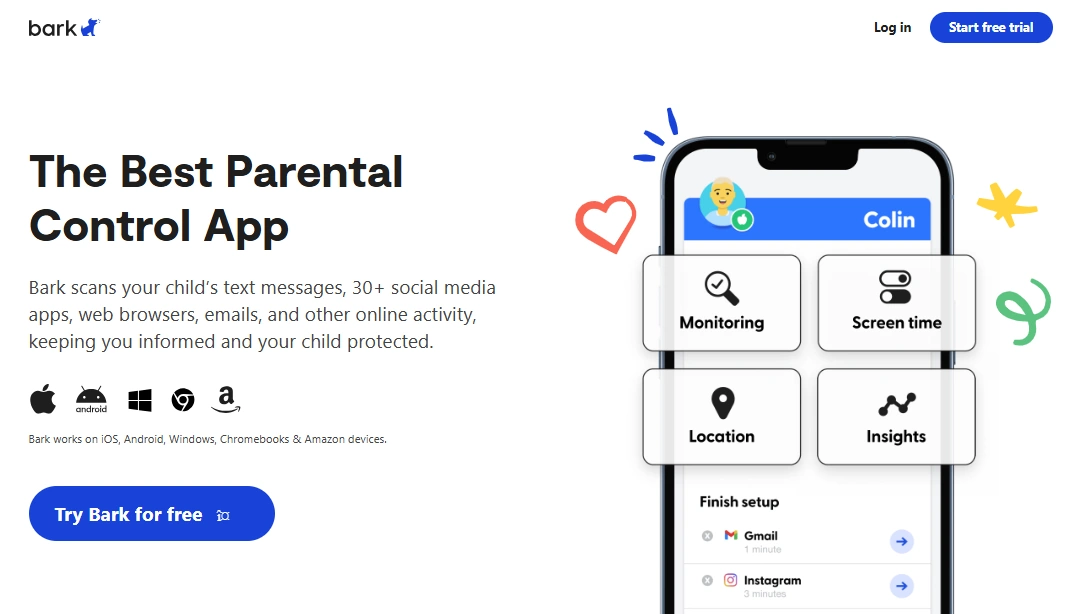
Bark is a strong pick when you want alerts and guidance instead of turning parenting into constant manual phone-checking. It’s often the most comfortable choice for families who want safety without making the relationship feel like surveillance.
Product Highlights
- Alerts around risk signals (plan/device dependent)
- Family-friendly “guidance” style reporting
- Works well for younger kids and early teens
What’s to like
- Great “safety-first” approach for families
- Less micromanagement than deep log-style tools
- Often easier to keep trust intact
What’s not to like
- Not designed for deep, message-by-message logging
- Feature availability depends on plan and setup
PROS
- Best for alert-driven parenting
- Good for younger kids and healthy boundaries
CONS
- May feel limited if you need very detailed visibility
Check Bark: view plans on the official site.
Parentaler – simple screen time + web filtering rules (2026)
Parentaler is a strong option if your #1 goal is clear rules and routines: screen time boundaries, basic web filtering-style controls, and day-to-day parenting structure. It’s often a great fit for families who want “simple and consistent” rather than “feature maximum.”
Compare approaches if you’re undecided: Eyezy vs Parentaler: Best for Non-Tech-Savvy Parents.
Product Highlights
- Routine-focused screen time controls
- Web filtering-style rules
- Good fit for younger kids and clear household boundaries
What’s to like
- Easy for non-technical parents
- Strong “rules first” parenting style
What’s not to like
- May be too light if you need deeper visibility into many apps
PROS
- Simple daily parenting controls
- Great starting point for kids
CONS
- Not ideal if you need advanced monitoring depth
Check Parentaler: view plans on the official site.
mSpy – broader visibility when limits aren’t enough (2026)
mSpy is often chosen when parents need more visibility than basic parental controls provide—especially in higher-risk situations (bullying, inappropriate contacts, repeated rule-breaking, etc.).
Step-by-step guide: mSpy for Android: Full Review & Setup Guide.
Product Highlights
- Remote dashboard for broader activity visibility
- Useful when “limits only” don’t solve the problem
- Works best with proper Android permissions and setup
What’s to like
- More comprehensive than simple screen-time tools
- Helpful for serious, specific safety concerns
What’s not to like
- More setup complexity than “simple controls” apps
- Feature depth varies by Android version and device model
PROS
- Strong all-round monitoring suite
- Good for complex teen situations
CONS
- Overkill for many younger kids
Check mSpy: view plans on the official site.
Eyezy – clean parent dashboard for daily check-ins (2026)
Eyezy is a great choice if you want a clean, parent-friendly dashboard and an easier day-to-day monitoring experience. It’s often picked by parents who want clarity and simplicity without feeling overwhelmed.
Android setup guide: Eyezy for Android: Complete Review & Setup.
Product Highlights
- Parent-first UI (easy daily review)
- Solid general monitoring coverage (device dependent)
- Good option for families who want a clear dashboard
What’s to like
- Approachable for non-technical parents
- Good “daily check-in” feel
What’s not to like
- Not every feature works the same on every Android model
PROS
- Great usability
- Strong fit for routine monitoring
CONS
- May feel limited if you want power-user depth
Check Eyezy: view plans on the official site.
uMobix – shortlist for social-heavy teens (2026)

uMobix is often shortlisted when your teen spends most of their time in social and messaging apps. It’s a situational pick: great when social apps are the core problem, less important if you mainly need screen time and web rules.
Android guide: uMobix for Android: Review & Setup.
Product Highlights
- Good for social-heavy Android use cases (device/OS dependent)
- Remote dashboard workflow
- Useful when social apps are the primary risk area
What’s to like
- Strong shortlist candidate for teen-focused scenarios
- Worth comparing against parent-first dashboards
What’s not to like
- Coverage varies by Android model and OS version
- Not the simplest option if you only want screen time rules
PROS
- Great when social apps are the main concern
CONS
- Device-dependent results
Check uMobix: view plans on the official site.
Extra: consider kid-safe phones & GPS watches
If your child is younger (or you want fewer “smartphone problems” in the first place), you might get better results with a kid-focused device instead of a full monitoring setup. See: Best Kids Phones and GPS Watches With Parental Controls.
FAQ
Are Android parental control apps legal for kids and teens?
Legality depends on your country, device ownership, and consent rules. In general, it’s safest when parents/guardians monitor a device they own or manage for their child. Read: Legal Phone Tracking: What’s Allowed and What’s Not.
Do I need physical access to my child’s Android phone to set parental controls?
Usually yes—at least for the initial setup (installing the app, granting permissions, enabling protections). After that, most apps let you manage settings from your own dashboard.
Do these parental control apps require rooting an Android phone?
Most mainstream parental control solutions aim to work without root. However, some “deeper” monitoring capabilities may be limited depending on Android version and device model.
Which is better for younger kids: Bark or Parentaler?
If you want alerts and guidance, Bark is often the better fit. If you mainly want simple rules (screen time + web filtering-style controls), Parentaler is usually the simplest starting point. You can also compare: Bark vs Parentaler: Which Parental App Is More Reliable?.
What’s best for teens without destroying trust?
Start with transparency: clear rules, screen time boundaries, and safety check-ins. Consider alert-based tools first, and only add deeper monitoring if there’s a real safety concern.
Will parental control apps drain battery on Android?
They can. Features that run constantly (syncing, location updates, heavy background reporting) may affect battery. If battery becomes an issue, reduce unnecessary features and check the phone’s battery optimization settings.